The fundamental principle behind the tube structural system is the concentration of structural strength and stiffness along the building’s perimeter. The rapid development of tall…
Author: Omotoriogun Victor
Outrigger structural systems represent a key innovation in the design of tall buildings. By linking the core to perimeter columns, they transform structural behaviour, reduce…
The catastrophic collapse of Rana Plaza in Bangladesh on 24 April 2013 stands as one of the most pivotal industrial disasters of the twenty‑first century. Beyond its tragic human toll, the event exposed critical failures in structural design, regulatory oversight, workplace safety, global supply chains, and corporate responsibility.
Structural joints are not secondary details; they define how structures behave. Pinned, rigid, and semi-rigid joints determine internal force distribution.
Differential temperature effects are silent but powerful forces in long-span bridges. Unlike traffic load, temperature acts every day and affects the entire structure.
This article explores how wind loads affect bridges, and practical strategies for safer, resilient structures.
A practical guide to beam, arch, suspension, and cable-stayed bridges
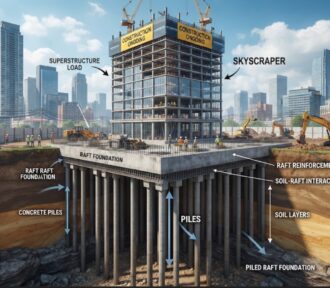
Raft and pile foundations approach the same problem from different directions. A raft foundation spreads structural load over a large surface area near the ground…
Dynamic loads are forces that act on a structure and vary over time. Unlike static loads, they induce acceleration, vibration, and in some cases resonance.
Forensic engineering transforms structural failure from tragedy into knowledge. It demands patience, scientific discipline, and unwavering commitment to truth.