
Architectural creativity and structural efficiency do not have to conflict. Long spans, cantilevers, transfer floors and irregular grids can all prod
Structures from first principles!
Architectural creativity and structural efficiency do not have to conflict. Long spans, cantilevers, transfer floors and irregular grids can all prod
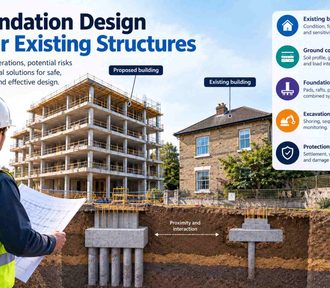
Foundation design near existing structures requires the engineer to consider the proposed building and its surroundings as a connected ground-structure system.
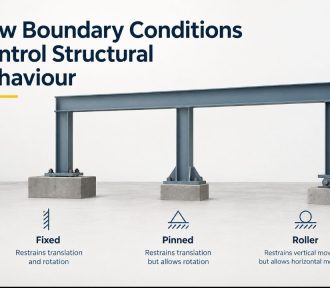
Boundary conditions are among the most influential assumptions in structural analysis because they determine how a structure is restrained and how forces are transferred through it.
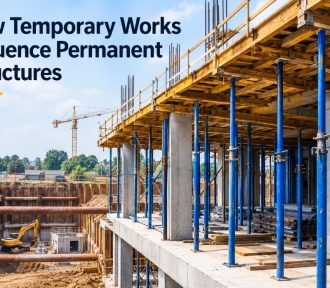
Temporary works may only exist for a short period, but their influence on a permanent structure can extend far beyond the construction stage.
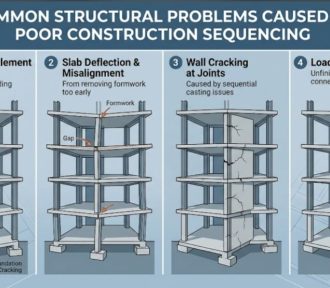
A structural design may be perfectly adequate in its completed condition and still experience serious problems during construction. This happens because a structure does not…
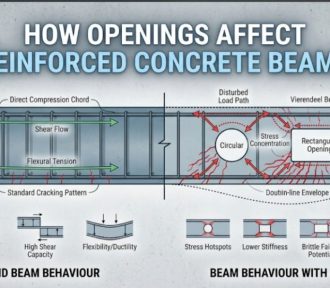
An opening changes the behaviour of a reinforced concrete beam by interrupting its normal force path. The remaining concrete and reinforcement must redirect the internal forces around the void, which can increase local shear, bending and stress concentrations.
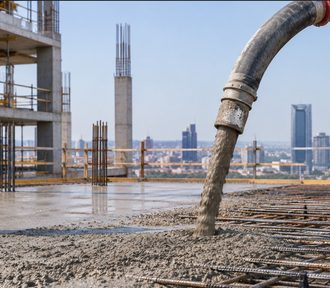
Concrete placement in high-rise buildings is a coordinated construction operation involving concrete production, transportation, pumping, placing, compaction and quality control.
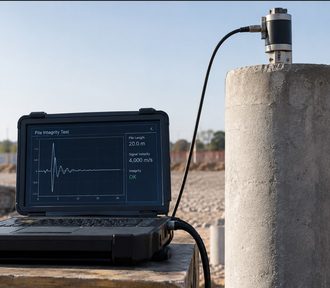
Pile integrity testing provides an important quality-control link between the pile assumed during structural and geotechnical design and the pile actually constructed on site.
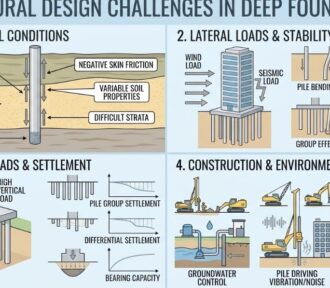
Deep basements present structural challenges that extend well beyond the design of basement walls and slabs.
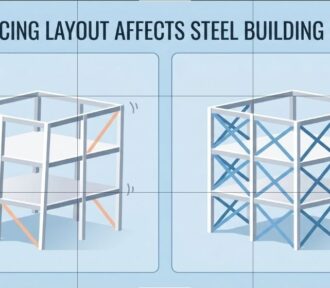
Bracing layout has a major influence on the stability and behaviour of steel buildings. The position of the braced bays affects lateral stiffness, torsional response, diaphragm forces, load paths and foundation reactions