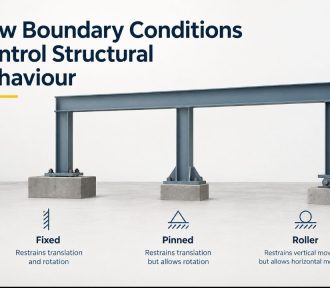
Boundary conditions are among the most influential assumptions in structural analysis because they determine how a structure is restrained and how forces are transferred through it.
Structures from first principles!
Boundary conditions are among the most influential assumptions in structural analysis because they determine how a structure is restrained and how forces are transferred through it.
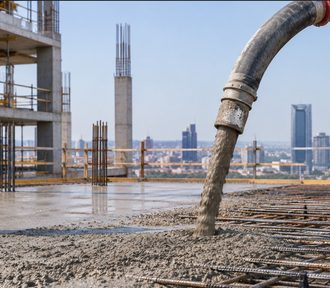
Concrete placement in high-rise buildings is a coordinated construction operation involving concrete production, transportation, pumping, placing, compaction and quality control.
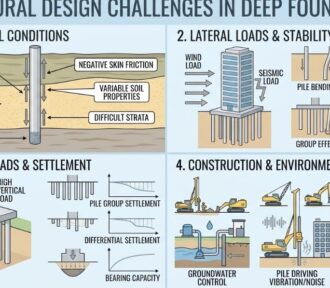
Deep basements present structural challenges that extend well beyond the design of basement walls and slabs.

Foundation design for tall buildings requires more than checking whether the soil can carry the building weight. The engineer must consider soil conditions, vertical loads, settlement, differential settlement, wind forces, overturning, lateral resistance and construction effects.
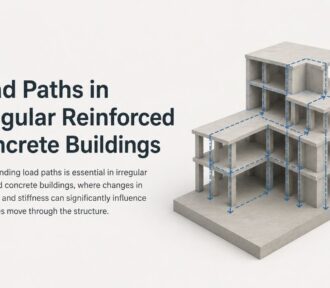
Understanding load paths becomes particularly important when designing irregular reinforced concrete buildings. Changes in column positions, transfer floors, setbacks, large openings, irregular cores and uneven stiffness can all change the way forces move through a structure.
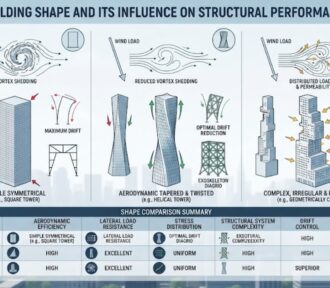
Building shape has a direct influence on structural performance because geometry controls how structural elements are arranged and how forces move through the building.
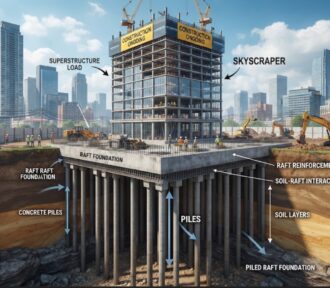
A piled raft foundation becomes particularly valuable when a conventional raft can no longer provide the required settlement performance efficiently, but a conventional piled foundation would involve more piles than necessary.
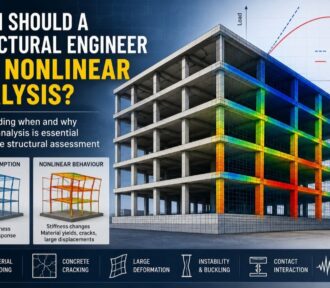
Nonlinear analysis becomes valuable when structural behaviour departs significantly from the assumptions of linear elastic analysis.
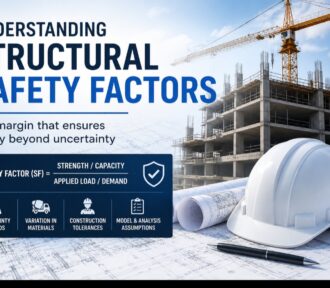
Structural safety factors form the foundation of safe structural design by accounting for the uncertainties that exist in loads, material properties, construction quality, and structural analysis.
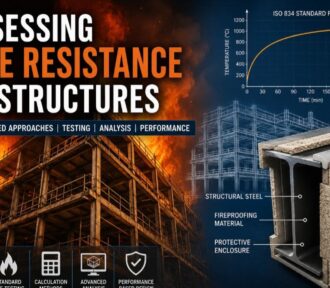
Fire is one of the most severe accidental actions that a structure may experience during its service life. Unlike conventional design loads such as dead,…