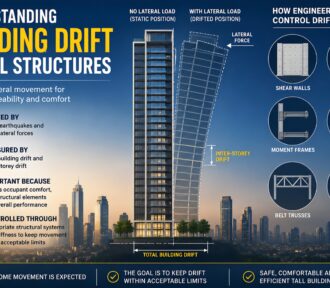
Excessive building drift can have serious consequences even when the primary structural elements remain strong enough to support applied loads.
Structures from first principles!
Excessive building drift can have serious consequences even when the primary structural elements remain strong enough to support applied loads.

Constructability is a fundamental aspect of structural design that ensures engineering solutions are practical, efficient, safe, and economical to build.

understanding construction sequence allows engineers to anticipate temporary conditions, manage risks, and ensure that structural safety is maintained from the first stage of construction to the completed project
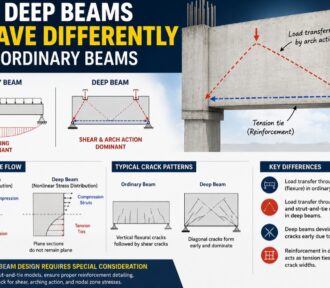
beam is generally considered deep when its span-to-depth ratio becomes sufficiently small such that strain distribution across the depth is no longer linear.

With computational design, the role of the structural engineer is shifting from manual calculation to model development, validation, and interpretation. The focus is no longer on solving equations alone, but on understanding how structures behave as integrated systems.
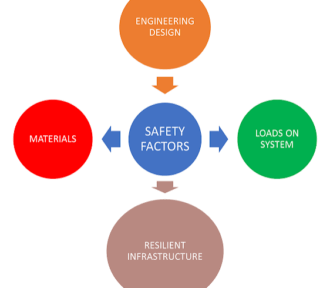
This article explains the full concept of partial factors, their development, calibration, and application across different materials and load types.

This article investigates how across-wind loads impact rectangular tall buildings, what the Eurocode and other global standards say about them, and where these provisions fail to capture the full picture.

This article explores key developments in structural glass. It focuses on what engineers must understand to design glass safely.

This article explains why structural engineers must always check load combinations manually. It draws on examples from practice, code logic, and project outcomes.

This article explores human–structure interaction from the structural engineering perspective. Have you ever wondered why a bridge vibrates slightly under your feet or why a…