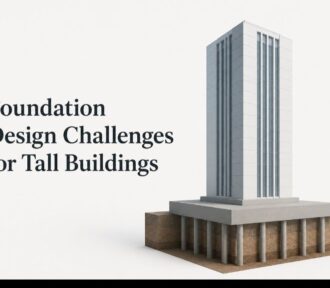
Foundation design for tall buildings requires more than checking whether the soil can carry the building weight. The engineer must consider soil conditions, vertical loads, settlement, differential settlement, wind forces, overturning, lateral resistance and construction effects.
Tag: Tall Buildings
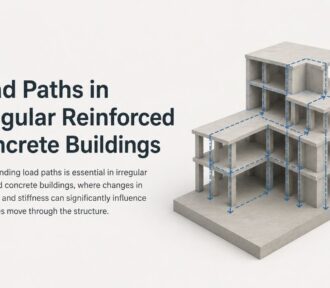
Understanding load paths becomes particularly important when designing irregular reinforced concrete buildings. Changes in column positions, transfer floors, setbacks, large openings, irregular cores and uneven stiffness can all change the way forces move through a structure.
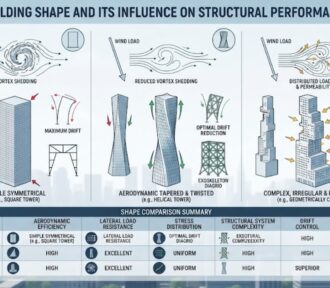
Building shape has a direct influence on structural performance because geometry controls how structural elements are arranged and how forces move through the building.
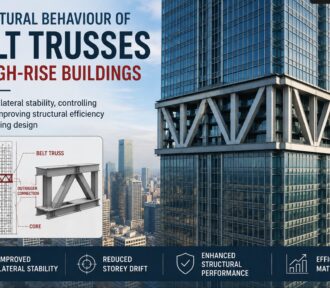
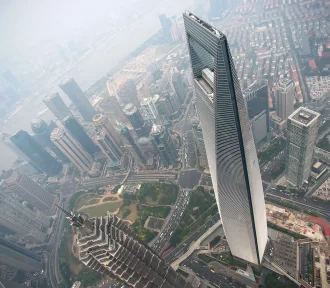
Belt trusses have become one of the defining structural systems in modern high-rise engineering because they significantly enhance the lateral behaviour of tall buildings without requiring excessive increases in member sizes.
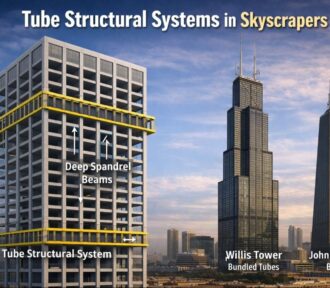
The fundamental principle behind the tube structural system is the concentration of structural strength and stiffness along the building’s perimeter. The rapid development of tall…
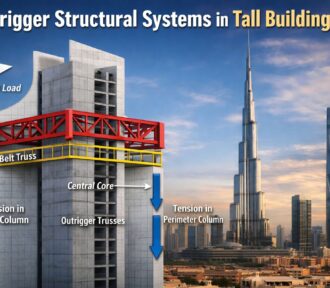
Outrigger structural systems represent a key innovation in the design of tall buildings. By linking the core to perimeter columns, they transform structural behaviour, reduce…
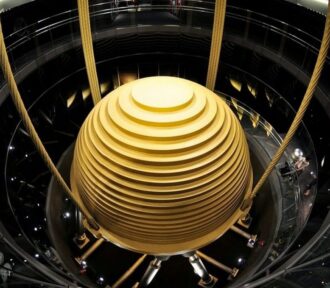
This article explores the principles, types, and applications of damping systems in tall buildings, emphasizing their importance in modern construction.
This article is a discussion on the phenomenon of vortex shedding in tall buildings. It discusses the causes, effects, and explores the innovative solutions that…
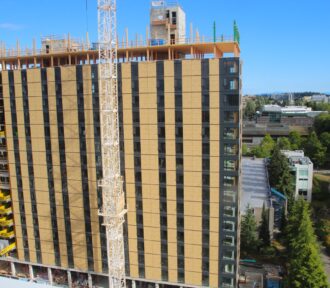
Despite timber being one of the earliest structural materials around and its globally recognized status for sustainability, the tallest Timber building is still the 18-Storey building at the University of British Columbia, why?