Box girder bridges represent one of the most efficient and widely used structural systems in modern bridge engineering.
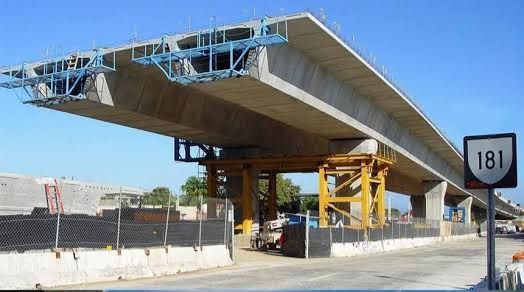
Bridge engineering has evolved significantly over the past century as engineers have sought more efficient ways to span longer distances while maintaining structural safety and durability. Among the various bridge forms developed, the box girder bridge has emerged as one of the most widely used structural systems for medium to long spans. Its ability to efficiently resist bending and torsion makes it particularly suitable for modern highway and railway bridges.
The box girder bridge derives its name from the shape of its main structural element, which is a hollow box-like section. This closed cross-section provides high torsional stiffness and structural efficiency, allowing the bridge to perform well under complex loading conditions. Unlike open sections such as I-beams, the box girder can resist twisting forces more effectively, making it ideal for curved bridges and situations where loads are not symmetrically applied.
Over the years, box girder bridges have been used in numerous major infrastructure projects due to their versatility and performance. Notable examples such as the and the demonstrate how this structural form can be adapted to different design requirements while maintaining efficiency and stability.
Structural Form and Geometry
The defining feature of a box girder bridge is its hollow structural cross-section, typically formed as a rectangular or trapezoidal box. This section may be constructed from reinforced concrete, prestressed concrete, or steel, depending on the span length, loading conditions, and construction method. The hollow interior reduces self-weight while maintaining high strength and stiffness, making the structure both efficient and economical.
The top flange of the box girder usually forms the bridge deck, which carries traffic loads. The bottom flange resists tensile and compressive forces generated by bending, while the vertical or inclined webs connect the flanges and transfer shear forces. Because the section is closed, it behaves as a single unit, allowing stresses to be distributed efficiently throughout the structure.
This closed geometry also provides excellent torsional resistance. In bridge structures, torsion can arise from eccentric loading, curved alignments, or uneven traffic distribution. The box girder’s ability to resist these twisting forces makes it particularly suitable for modern bridge designs where alignment and loading conditions are often complex.
Structural Behaviour Under Loading
The behaviour of a box girder bridge under loading is governed primarily by bending, shear, and torsion. When traffic loads act on the bridge deck, bending moments develop along the span. The top flange typically experiences compression, while the bottom flange is subjected to tension. The webs transfer shear forces between the flanges, ensuring that the structure acts as an integrated system.
In addition to bending and shear, torsion plays a significant role in box girder bridges, especially in curved bridges or when loads are applied asymmetrically. Unlike open sections, which may twist easily, the closed box section resists torsion through the development of shear flow around its perimeter. This mechanism allows the structure to maintain stability even under complex loading conditions.
The ability to resist torsion efficiently is one of the main reasons box girder bridges are widely used in modern infrastructure. It allows engineers to design bridges with curved alignments, variable widths, and complex geometries without compromising structural performance.
Shear Lag and Stress Distribution
An important aspect of box girder behaviour is the phenomenon known as shear lag. In wide flange sections, stresses are not distributed uniformly across the entire width of the flange. Instead, higher stresses tend to occur near the webs, while the central portions of the flange may carry less load.
This uneven distribution of stress must be considered during design to ensure that the structure performs as intended. Engineers account for shear lag effects by using effective flange widths in their calculations, ensuring that the structural capacity is not overestimated.
Although shear lag can influence stress distribution, the overall performance of the box girder remains highly efficient due to the closed section and the interaction between its components. Proper design ensures that these effects do not compromise structural safety.
Materials and Construction Methods
Box girder bridges can be constructed using different materials, with prestressed concrete being one of the most common choices.
Prestressing introduces compressive forces into the concrete, improving its ability to resist tensile stresses and enhancing durability. Steel box girders are also widely used, particularly for longer spans where lighter structural weight is advantageous.
Construction methods vary depending on site conditions and span requirements. Many box girder bridges are built using segmental construction techniques, where the structure is assembled from smaller segments that are either precast or cast in place.
This method allows bridges to be constructed efficiently without the need for extensive temporary support structures.
Balanced cantilever construction is frequently used for box girder bridges, particularly when spanning large distances over obstacles such as rivers or highways. In this method, segments are added progressively on either side of a pier, allowing the structure to extend outward until the span is completed.
Advantages of Box Girder Bridges
The popularity of box girder bridges is largely due to their structural efficiency and versatility. The closed cross-section provides high torsional stiffness, making the structure suitable for a wide range of applications, including curved bridges and complex alignments.
The hollow section reduces self-weight while maintaining strength, allowing for longer spans and more economical designs. The geometry also provides a clean and streamlined appearance, which is often preferred in modern infrastructure projects.
Another advantage is the durability of box girder bridges, particularly when constructed using prestressed concrete. The enclosed section protects internal components from environmental exposure, reducing maintenance requirements and extending the lifespan of the structure.
Design Challenges
Despite their advantages, box girder bridges present several design challenges that must be carefully addressed. The analysis of torsional behaviour can be complex, especially for curved bridges where torsion plays a dominant role. Engineers must use advanced analytical methods to accurately predict structural behaviour under different loading conditions.
Construction of box girders also requires careful attention to detail, particularly in segmental construction. Alignment, prestressing, and joint detailing must be executed precisely to ensure that the structure behaves as intended.
Inspection and maintenance can also be more challenging due to the enclosed nature of the box section. Access must be provided for inspection of internal components, and proper ventilation is necessary to prevent moisture accumulation and corrosion.
Applications in Modern Infrastructure
Box girder bridges are widely used in modern infrastructure projects due to their adaptability and performance. They are commonly employed in highway bridges, railway bridges, and urban viaducts, where their ability to handle complex loading conditions is particularly valuable.
The is an example of how box girder construction can be used to create long and durable bridge structures. Similarly, the deck of the demonstrates the effectiveness of box girder design in resisting torsional forces in large-span bridges.
These applications highlight the versatility of the box girder system and its importance in modern bridge engineering.
Conclusion
Box girder bridges represent one of the most efficient and widely used structural systems in modern bridge engineering. Their closed cross-section provides excellent resistance to bending, shear, and torsion, making them suitable for a wide range of applications, including curved and long-span bridges.
The ability to combine structural efficiency with durability and adaptability has made box girder bridges a preferred choice for many infrastructure projects around the world.
Also See: Segmental Bridge Construction: Structural Concept, Engineering Methods, and Applications
Sources & Citations
• Hambly, E.C. Bridge Deck Behaviour. CRC Press, 1991.
• Barker, R.M., & Puckett, J.A. Design of Highway Bridges: An LRFD Approach. Wiley, 2013.
• Hewson, N. Prestressed Concrete Bridges: Design and Construction. Thomas Telford, 2003.
• EN 1993-2. Eurocode 3: Design of Steel Structures – Steel Bridges. European Committee for Standardization.
