The catastrophic collapse of Rana Plaza in Bangladesh on 24 April 2013 stands as one of the most pivotal industrial disasters of the twenty‑first century. Beyond its tragic human toll, the event exposed critical failures in structural design, regulatory oversight, workplace safety, global supply chains, and corporate responsibility. This article examines the collapse through a lessons‑learned framework aimed at practitioners, engineers, regulators, and industry leaders.
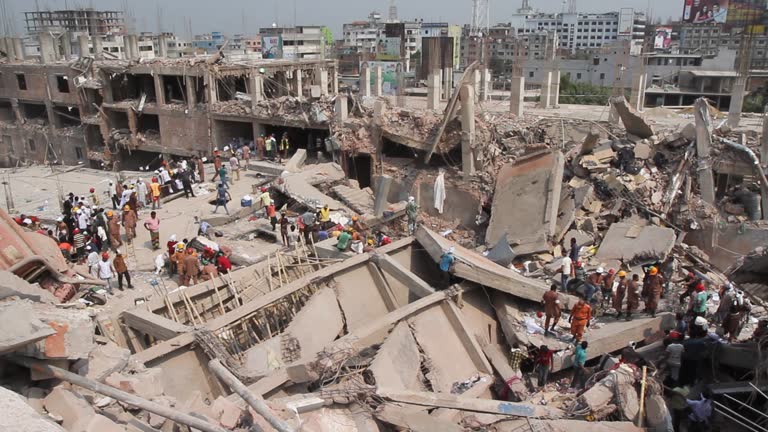
On a humid morning in April 2013, the Rana Plaza commercial building in Savar, Dhaka District, Bangladesh, collapsed suddenly, killing 1,134 people and injuring over 2,500 others. The building housed multiple garment factories producing apparel for international brands, a bank branch, and several shops. What should have been a routine workday became an unprecedented catastrophe: an entire building, bustling with activity, disintegrated in less than a minute. In the immediate aftermath, media coverage highlighted the human tragedy, the heroism of rescuers, and palpable grief among families and communities. Yet, beyond the emotional impact, structural engineers and safety professionals quickly recognized that the collapse embodied systemic failures across engineering, governance, and socioeconomic systems.
In the decade since Rana Plaza, stakeholders across the world have grappled with fundamental questions: What exactly failed in the structure? How did warning signs go unheeded? Why did regulatory bodies and corporate buyers not enforce basic safety precautions? And critically, how can future disasters be prevented in contexts where industrial growth pressures collide with weak oversight? This article weaves together the technical, managerial, ethical, and institutional lessons from Rana Plaza, shedding light on how to transform tragic hindsight into enduring foresight.
This narrative emphasizes active accountability, structural integrity, proactive safety cultures, and integrated systems thinking. While the collapse occurred in Bangladesh’s garment sector, its lessons transcend national boundaries and industrial sectors.
1. Structural Shortcomings: What the Building Tells Us
1.1 Inappropriate Design for Intended Use
Structural design must align with the intended use of a building. Rana Plaza was originally designed for light‑use commercial purposes such as shops, small offices, and residential apartments. The original design did not account for heavy machinery, high human occupancy, or dynamic loads associated with industrial equipment.
However, over time, the building’s use changed dramatically: garment factories with sewing machines, generators, storage racks, and thousands of workers occupied the upper floors. This conversion constituted a change of use that substantially increased load demands — both static (weight) and dynamic (vibration) — on the floor slabs and load‑bearing elements.
Lesson 1.1: Design for the maximum expected loading conditions throughout the life of the building. Any change of use must trigger a formal redesign and structural assessment.
1.2 Insufficient Structural Capacity and Reinforcement
Post‑collapse investigations revealed glaring structural weaknesses. Columns lacked sufficient reinforcement and concrete strength did not meet code requirements. Many columns were undersized, and steel bars were inadequately anchored. These deficiencies reduced the building’s capacity to resist compressive and tensile forces.
Furthermore, upper floors were added without proper engineering review. These additions increased gravity loads, exacerbated stress concentrations, and weakened global structural behavior.
Lesson 1.2: Structural members must be designed with appropriate safety margins and reinforcement per applicable codes. Unauthorized modifications compromise integrity and must be prohibited.
1.3 Neglected Soil and Foundation Considerations
The construction site was on filled land with insufficient geotechnical investigation. Without understanding soil bearing capacity and settlement behavior, the foundation lacked the robustness needed for multi‑story industrial occupancy. Differential settlement likely contributed to misaligned loads and additional stress on columns.
Lesson 1.3: Perform thorough geotechnical investigations and design foundations accordingly. Soft or filled soils require special foundation solutions (e.g., deep piles) to ensure stability.
1.4 Dynamic Loading and Vibration Effects
Industrial machinery such as diesel generators impart dynamic loads and vibrations to structural systems. These were not considered in the initial design. Over time, vibration induced fatigue in concrete and connections, accelerating deterioration.
Lesson 1.4: Account for dynamic and cyclical loads in design, especially when buildings host machinery or processes with significant mechanical vibration.
2. Warning Signs and Human Decisions: System Failures that Preceded Collapse
2.1 Visible Cracks: Ignored Evidence of Structural Distress
Workers and supervisors observed large cracks in walls and structural elements on 23 April 2013 — a full day before the collapse. Despite clear signs of distress, factory managers ordered workers to return on the morning of 24 April due to production deadlines.
These cracks indicated critical failure modes such as bending stress, shear stress, and foundation settlement. Monitoring these cracks required immediate engineering evaluation and building evacuation.
Lesson 2.1: Visible structural distress is a critical red flag. Evacuation and professional evaluation must be immediate priorities.
2.2 Lack of Accountability and Risk Communication
Workers feared retaliation or loss of wages if they refused to enter the unsafe building. Supervisors prioritized production over safety, illustrating a breakdown in risk communication and an absence of a safety culture that empowers workers to voice concerns without fear.
Lesson 2.2: Instituting mechanisms that empower workers to report safety concerns without reprisals is essential. Safety cannot be subordinate to production.
2.3 Regulatory Gaps and Enforcement Weaknesses
Local authorities lacked coordination and regulatory enforcement mechanisms. Prior building code violations went unnoticed or unpenalized. Inspections were infrequent, and permits were granted without rigorous review of structural plans or construction methods.
Lesson 2.3: Robust enforcement of building codes and routine inspections are critical safeguards. Regulatory agencies must be independent, well‑resourced, and empowered to act decisively.
3. Safety Culture and Organizational Behavior
3.1 Engineering Ethics and Professional Responsibility
A central lesson of Rana Plaza is the role of professional ethics. Engineers who prepared plans or supervised construction implicitly accepted accountability for safety, yet standards were compromised.
Ethical practice requires engineers to:
- Refuse to certify unsafe designs.
- Advise owners and authorities of hazards.
- Report unsafe conditions even under pressure.
Lesson 3.1: Engineering ethics must be upheld as a non‑negotiable foundation of practice, with mechanisms for whistle-blowing and accountability.
3.2 Worker Training and Empowerment
Thousands of workers lacked basic training to recognize structural risk factors. Safety training should have included awareness of structural defects, evacuation procedures, and channels to report hazards.
Lesson 3.2: Establish ongoing safety training and worker empowerment programs to foster shared responsibility for hazard identification and response.
3.3 Integrated Safety Management Systems
Most factories lacked formal safety management systems. Effective systems require hazard identification, risk assessment, emergency planning, and continuous improvement.
Lesson 3.3: Implement formal safety management systems aligned with international standards (e.g., ISO 45001) to institutionalize risk control measures.
4. Global Supply Chains and Corporate Responsibility
4.1 Indirect Accountability of International Buyers
Western fashion brands sourced apparel from factories inside Rana Plaza, often through intermediaries. Although buyers did not own the factories, their purchasing practices (tight deadlines, low prices) drove intense pressure on suppliers. These pressures incentivised cost‑cutting, including neglect of safety.
Lesson 4.1: Global buyers must assume responsibility for conditions in their supply chains, including conducting audits and ensuring compliance with safety standards.
4.2 Transparency and Third‑Party Audits
Prior to the collapse, many factories passed superficial audits that failed to assess structural safety. Some audits were conducted by entities paid by factory owners, creating conflicts of interest.
Lesson 4.2: Authentic third‑party, independent audits with transparent reporting are essential to verify workplace safety and structural integrity.
4.3 Building Remediation and Improvement Programs
After Rana Plaza, initiatives like the Accord on Fire and Building Safety in Bangladesh emerged, mandating building inspections and remediation. These programs demonstrated how collaborative efforts can improve conditions but also underscored that reactive measures should not replace proactive safety enforcement.
Lesson 4.3: Collaborative safety programs are valuable, but proactive regulation and enforcement must lead systemic change.
5. Institutional and Policy Lessons
5.1 Strengthening Building Codes and Enforcement
Bangladesh revised its building codes after Rana Plaza, but widespread compliance remains a challenge. Codes must be aligned with international standards and rigorously enforced with consequences for violations.
Lesson 6.1: Regulatory frameworks must be unambiguous, enforceable, and backed by political will and resources.
5.2 Geotechnical Risk Assessment Integration
Many building codes in developing contexts underemphasize geotechnical risk. Integrating soil assessment and foundation design requirements reduces risk in variable soil conditions.
Lesson 6.2: Ensure geotechnical investigations are mandatory for all structures beyond light commercial use.
5.3 Cross‑Sector Collaboration
Government, industry, civil society, and labor representatives must collaborate to align safety goals with economic development.
Lesson 6.3: Multi‑stakeholder engagement fosters shared accountability and durable safety outcomes.
Conclusion
The collapse of Rana Plaza stands as a somber reminder that human lives depend on systems far larger than any single floor slab or column. It illustrates that structural failure is rarely the result of a single error. Rather, it emerges from a cascade of decisions, technical, managerial, economic, and ethical. If the industry is to honor the memory of those lost, professionals and leaders must institutionalize the hard lessons learned: design courageously with integrity, enforce rigorously with consistency, manage collaboratively with transparency, and care fiercely with unwavering human dignity.
Also See: Lessons from the I – 90 Tunnel Ceiling Collapse
Sources & Citations
- Rana Plaza collapse, Wikipedia.
- “Nine Reasons for Rana Plaza Collapse,” The Daily Star Investigative Report.
- “What Caused the Rana Plaza Tragedy?” Tamsin Blackbourn, Structural Failure Commentary.
- Global structural safety analyses and technical reviews of industrial building failures.
- Reports from the Accord on Fire and Building Safety in Bangladesh.
- Engineering ethics and safety management frameworks (ISO 45001, ASCE Guidelines).
