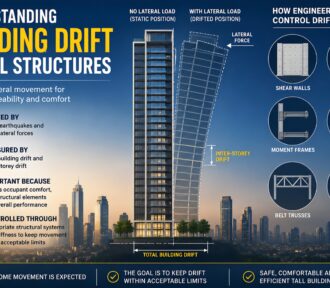
Excessive building drift can have serious consequences even when the primary structural elements remain strong enough to support applied loads.
Structures from first principles!
Excessive building drift can have serious consequences even when the primary structural elements remain strong enough to support applied loads.
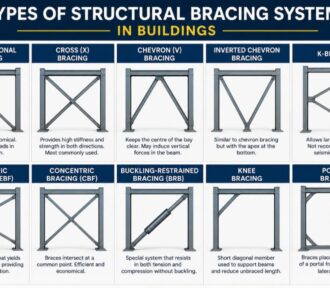
A structural bracing system is an arrangement of structural members designed primarily to resist lateral loads
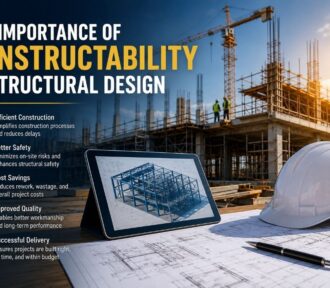
Constructability is a fundamental aspect of structural design that ensures engineering solutions are practical, efficient, safe, and economical to build.
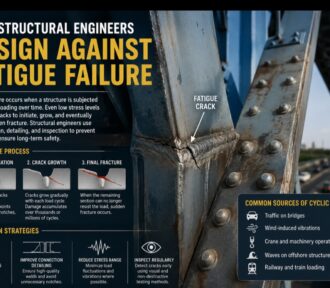
Fatigue failure differs fundamentally from conventional structural failure because it develops gradually through repeated loading rather than a single overload event.
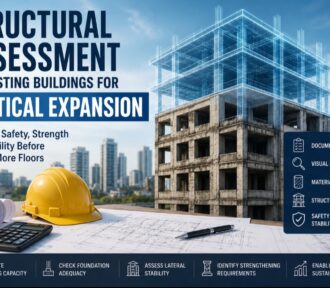
Vertical expansion offers an attractive solution for increasing usable space without acquiring additional land, but it introduces substantial structural demands that cannot be ignored.
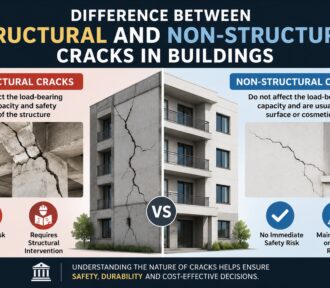
The difference between structural and non-structural cracks lies not in appearance but in engineering behavior. Structural cracks indicate stress conditions that exceed safe limits, while non-structural cracks reflect normal material responses to environmental and time-dependent effects.
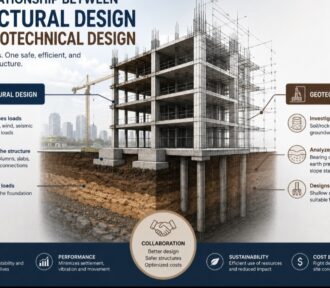
Every structural load eventually reaches the ground, and every ground movement influences the structure. This simple reality makes collaboration between structural and geotechnical engineers essential to successful project delivery.
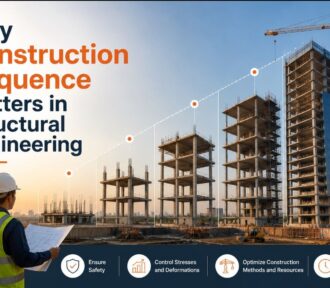
understanding construction sequence allows engineers to anticipate temporary conditions, manage risks, and ensure that structural safety is maintained from the first stage of construction to the completed project
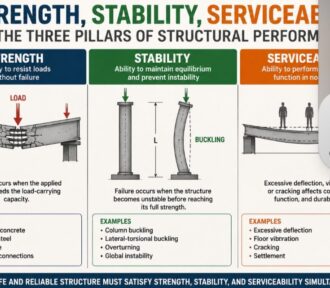
While strength protects against structural failure, stability prevents loss of equilibrium, and serviceability ensures satisfactory performance during normal use.
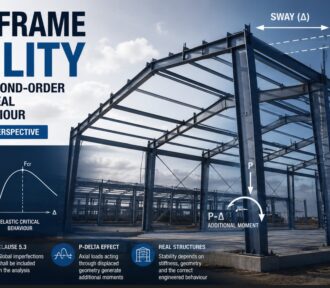
This article explains how portal frame stability is governed by sway and second-order effects, and how Eurocode 3 (EN 1993-1-1) treats these phenomena through its stability rules.