This article explores how to integrate structural elements within complicated facade designs. It explores the complexities involved with planning, coordination, and collaboration
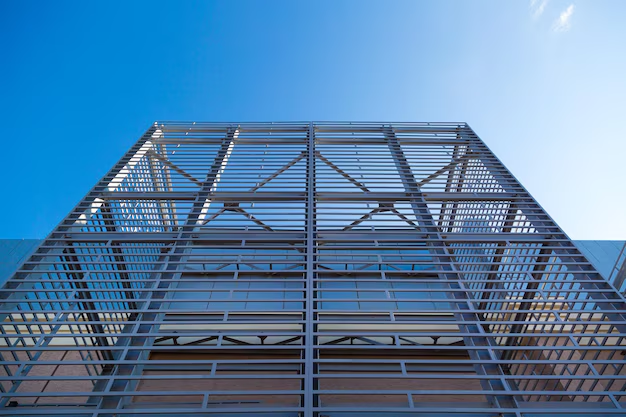
Buildings are evolving with increasingly complex facade designs. Modern architecture demands not only aesthetic appeal but also structural performance, durability, and compliance with stringent fire and safety regulations. This complexity introduces significant challenges in the integration of structural elements within the slab edge, a narrow but critical zone where multiple components converge. These include masonry support systems, post-tensioning pockets, balcony connections, cavity fire barriers, and secondary structure protrusions. Conflicts among these elements can compromise both safety and constructability if not addressed during the design phase.
Early engagement between architects, structural engineers, contractors, and manufacturers is essential to prevent costly rework and delays. Identifying potential clashes at the outset allows for the development of coordinated solutions that ensure each component functions as intended. The introduction of the Building Safety Act in England and Wales, particularly the Gateway 2 submission requirements for higher-risk buildings, has heightened the importance of early collaboration and fully coordinated designs. Designers must now account for fire safety, structural stability, and long-term maintenance when integrating multiple facade elements within constrained zones.
Successful facade integration requires a deep understanding of how structural, fire, and architectural elements interact. Slab edges often become congested with competing systems. Masonry support systems must work in tandem with cavity fire barriers, wall ties, balcony connectors, and protruding secondary structures. Each system influences the performance of the others. Misalignment or incorrect specification can cause excessive deflection, cracking, or even partial facade failure. It is therefore imperative that designers understand the complex interdependencies of the slab edge zone and plan solutions that optimize structural integrity and fire safety while meeting aesthetic goals.
Masonry Support Systems and Coordination Challenges
Masonry support systems provide stability to brickwork or precast panels while transferring loads back to the primary structure. Their design must account for both vertical and lateral forces, including wind and imposed loads. Wall ties are a crucial component, transferring lateral loads from the masonry to the main structure. Incorrect placement of ties, particularly between 225mm and 300mm above masonry support angles, can compromise load transfer and lead to cracking or bulging of brickwork.
The first row of wall ties is critical. If improperly installed, the masonry can fail prematurely. Designers must ensure ties are compatible with brackets and other slab edge components. Factors influencing tie specification include cavity width, substrate type, wind load, and thermal performance. In some cases, specialist ties are required. Careful coordination with the manufacturer and installation team is essential to avoid clashes and ensure proper load distribution.
Lightweight steel framing systems (SFS) further complicate slab edge design. These systems are often positioned above or below the slab but may project into the cavity. When SFS components interfere with masonry support brackets, notching or custom bracket designs may be necessary. Notching reduces bracket strength, requiring wider or thicker sections to maintain structural performance. Vertical and horizontal adjustments, such as slots or cast-in channels, allow on-site flexibility, but designers must ensure that adjustments do not compromise stability or increase stress on fasteners.
Post-tensioned concrete slabs introduce additional complexities. High-strength steel tendons reduce slab thickness but require pockets to allow jacking and tensioning. These pockets must be carefully positioned to avoid interfering with masonry support brackets. Improper alignment can reduce bearing surfaces, increase bracket stress, and necessitate more frequent bracket spacing or custom solutions. Early planning of pocket locations, bracket spacing, and vertical/horizontal adjustments is essential for structural and constructability success.
Fire Barrier Coordination
Cavity fire barriers are critical for compartmentation, preventing smoke and flames from spreading through facade cavities. The Grenfell Tower fire heightened the regulatory emphasis on precise specification, installation, and maintenance of fire barriers. These barriers must integrate seamlessly with masonry support systems to maintain both fire safety and structural stability.
When designing slab edge systems, brackets must account for cavity fire barriers. Brackets partially penetrating barriers must not compromise either structural support or barrier integrity. Collaboration between designers and fire engineers is crucial to ensure that brackets, wall ties, and fire barriers function together without conflicts. Any gaps or misalignment can create weak points in both structural and fire safety performance. Proper detailing, coordination, and on-site supervision are therefore mandatory.
Plenum Vents and Secondary Systems
Plenum vents, used for air circulation within buildings, often occupy the underside of slabs and span facade cavities. Their size and positioning can interfere with masonry support brackets. Larger vents may require custom bracket solutions to ensure adequate restraint and load transfer.
Design teams must communicate vent locations early in the project to avoid clashes with brackets, wall ties, or post-tension pockets. Coordination ensures that masonry support systems can be installed without interference while maintaining both vertical and lateral stability. Bracket adjustments may be needed, including increased thickness or spacing, to accommodate vents and prevent overstressing fasteners.
Case Study: Shoreline Crescent, Folkestone
The Shoreline Crescent development in Folkestone, Southeast England, demonstrates best practices for integrating complex facade systems. The building features convex and concave geometries with a glazed white brick facade, demanding precise coordination of masonry support systems, cavity fire barriers, and steel balcony connections.
Engineers collaborated closely with contractors and manufacturers to develop bespoke brackets that accommodated curved concrete frames and window locations at each level. All components were manufactured in grade 316 stainless steel to resist coastal corrosion. Special fabrications were created for acute corners to maintain aesthetic continuity while ensuring structural performance.
This project highlights the importance of early engagement and collaborative design. Close coordination between design, production, and installation teams allowed innovative solutions to emerge, ensuring both safety and aesthetic success. The Shoreline Crescent project demonstrates how meticulous planning and interdisciplinary collaboration can overcome the challenges of complex facade integration.
Structural Considerations for Masonry Brackets
Masonry brackets must provide both vertical support and lateral restraint. Designers must account for wind loads, live loads, and thermal expansion. Brackets are typically designed with ±20mm vertical adjustment, allowing for on-site alignment. Horizontal adjustment is achieved through cast-in channels or drilled connections in the slab.
Notching to avoid clashes with steel framing or vent systems reduces bracket strength. Designers compensate by increasing thickness or width and ensuring adequate load-bearing capacity. Bracket spacing may also need adjustment to maintain structural safety. Proper coordination with manufacturers ensures that custom solutions meet both structural and aesthetic requirements.
Balcony Connections
Balcony connectors are another critical interface within the slab edge. Non-standard brackets may be required to attach balconies to curved concrete frames without interfering with masonry support systems. Designers must coordinate bracket positions with both primary and secondary structural elements to avoid clashes and ensure safe load transfer.
Material selection is essential. Coastal environments, such as Shoreline Crescent, necessitate the use of corrosion-resistant stainless steel for both brackets and fixings. Failure to specify suitable materials can lead to premature corrosion and compromise structural performance. Collaboration between design and manufacturing teams ensures that balcony connections maintain both safety and longevity.
Best Practices for Integrated Facade Design
Early coordination between architects, structural engineers, fire engineers, and contractors is essential for successful facade integration. Designers should conduct detailed reviews of slab edge zones, identifying potential conflicts between masonry supports, fire barriers, steel framing, vents, and balcony connectors.
Use of Building Information Modelling (BIM) facilitates detection of clashes and allows virtual testing of component fit. Structural analysis software should be verified by experienced engineers, with manual checks where necessary. Design assumptions must be validated against site-specific conditions, including wind loads, slab thickness, and material properties.
Regular communication between design and construction teams prevents errors during installation. On-site supervision ensures that brackets, wall ties, and fire barriers are installed as designed. Inspection regimes should be established to monitor long-term performance, particularly in harsh environments or high-wind locations.
Conclusion
Integrating structural elements in complex facade designs requires careful planning, coordination, and collaboration. Masonry support systems, cavity fire barriers, balcony connectors, post-tensioning pockets, and secondary structures must coexist within the constrained slab edge zone without conflict.
Early engagement among architects, engineers, contractors, and manufacturers is essential to prevent costly rework, maintain structural integrity, and ensure regulatory compliance. Case studies, such as Shoreline Crescent, demonstrate how bespoke solutions, custom fabrication, and collaborative design can achieve both aesthetic and structural success.
The lessons from modern facade design highlight the importance of anticipating conflicts, validating assumptions, specifying materials correctly, and maintaining rigorous supervision and inspection.
Also See: Integrating Temporary and Permanent Works in Construction
Sources & Citations
- Grenfell Tower Inquiry (2017). Phase 1 Report: Building Safety and Fire Regulation. London: UK Government.
- Building Safety Act (2022). Gateway 2 Submission Requirements. London: HMSO.
- Leviat Engineering (2025). Masonry Support System Technical Guidance. London: Leviat.
- Structural Engineer (2025). Shah P. “Integrating Structural Elements in Complex Facade Designs”, The Structural Engineer, 103(6), pp. 30–36.
- BRE (Building Research Establishment) (1994). Guidance on Brickwork and Masonry Support. Watford: BRE.
