Eurocodes have changed how pile loads are presented and how pile resistances are designed. The UK Federation of Piling Specialists developed the E-Pile Schedule to meet these new requirements. This article explains the benefits of using a standard pile schedule for Eurocode design.
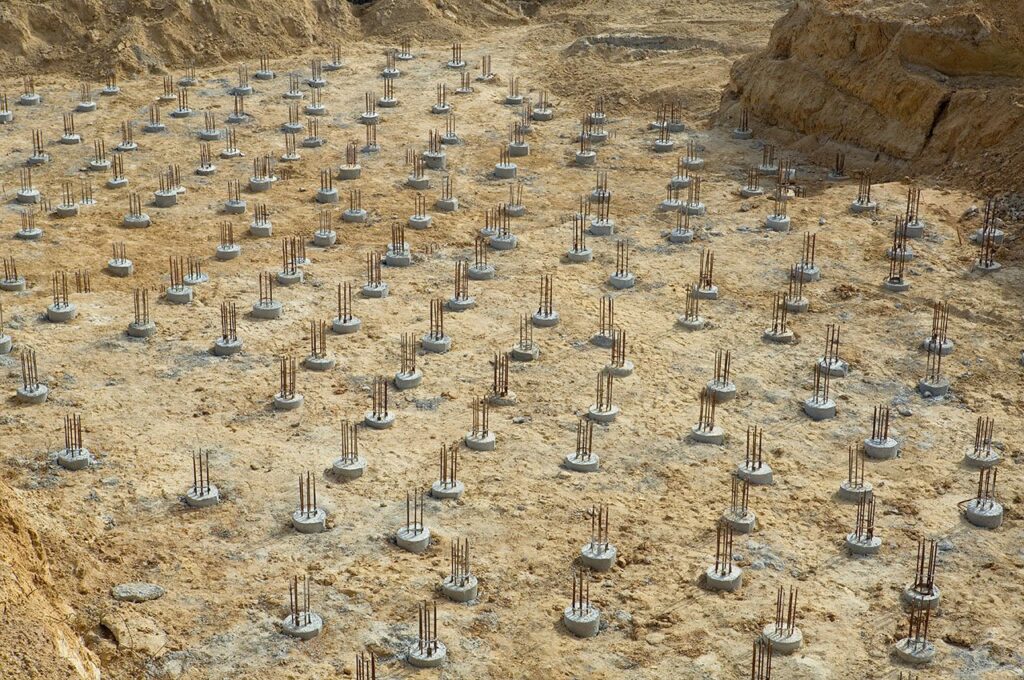
Pile foundation design in the United Kingdom has changed significantly with the adoption of Eurocodes. Designers now apply partial safety factors instead of global factors of safety. This change increased both accuracy and complexity in pile design practice.
Eurocode 7 requires designers to separate permanent and variable actions explicitly. Each action receives different partial factors under defined design combinations. This requirement demands clearer and more consistent pile loading information.
The FPS E-Pile Schedule addresses this industry challenge directly. It provides a standardized method for presenting pile loading data. This schedule improves transparency, efficiency, and reliability in Eurocode pile design.
Historical Background of Pile Design in the UK
UK pile design historically followed British Standard philosophy. Designers used a global factor of safety applied to a safe working load. This approach relied on simplicity and engineering judgment.
The safe working load remained unfactored during design checks. Designers selected a factor of safety based on testing regimes. This method worked well under limited loading combinations.
However, this approach lacked transparency regarding load composition. Designers could not distinguish permanent and variable actions clearly. Eurocode design exposed these limitations immediately.
Eurocode 7 Design Philosophy
EC 7 adopts a limit state design framework. This framework distinguishes ultimate and serviceability limit states. Designers must verify safety against both conditions.
Ultimate limit states prevent collapse and major failure. Serviceability limit states control settlement and deformation. Each limit state requires specific combinations of actions.
Eurocode 7 applies partial factors to actions and resistances. These factors explicitly address uncertainty and variability. The approach improves reliability but increases data requirements.
Design Approach 1 in Eurocode 7
The UK National Annex specifies Design Approach 1 for pile design. This approach governs most foundation projects in the United Kingdom. It requires verification against two ultimate limit state combinations.
Design Approach 1 separates structural and geotechnical failure modes. Each combination applies partial factors differently. Designers must assess both combinations independently.
Different aspects of the design may govern under different combinations. Pile length often depends on geotechnical checks. Reinforcement usually depends on structural checks.
Ultimate Limit State Combinations
Structural Ultimate Limit State (STR-ULS)
The structural ultimate limit state checks internal pile resistance. This combination applies higher partial factors to actions. Pile resistances remain unfactored.
Permanent actions receive a factor of 1.35. Variable actions receive a factor of 1.50. This case usually governs reinforcement design.
The governing design equation is:
STR_{ULS}=1.35G_k+1.5Q_kGeotechnical Ultimate Limit State (GEO-ULS)
The geotechnical ultimate limit state checks soil resistance. This combination applies partial factors to resistances. Actions receive reduced partial factors.
Permanent actions remain unfactored. Variable actions receive a factor of 1.30. This case usually governs pile length and toe level.
The governing design equation is:
GEO_{ULS}=1.00G_k+1.30Q_kImportance of Unfactored Actions
Pile designers require unfactored actions for several checks. Serviceability verification depends on characteristic loading. Settlement analysis requires realistic load values.
Minimum axial loads also influence reinforcement design. Designers cannot derive minimum values from maximum ULS loads alone. Missing data forces assumptions and introduces risk.
Factored loads alone remain insufficient for full verification. Unfactored actions ensure transparency and consistency. Eurocode design relies on this complete information set.
Limitations of Current Pile Loading Formats
Pile designers often receive incomplete or inconsistent loading data. Different formats create confusion and inefficiency. Design implications vary significantly.
Table 1: Limitations of various formats of Eurocode pile loading
| Format of pile loading | Limitation | Design implications |
| Pile loading given in the form of Safe Working Load (SWL) | The pile designer does not know the proportion of permanent and variable actions. The load breakdown is required as there are different partial factors applicable to Gk and Qk | Pile designer to assume Gk and Qk. For the same SWL, the EC7 design will give different pile lengths depending on the proportion of Gk and Qk |
| Pile loading given in the form of maximum STR-ULS loads and GEO-ULS loads | The pile designer does not know the un-factored actions which will allow verification of the serviceability limit state (SLS) and the calculation of minimum ULS loads | Pile settlement/serviceability cannot be verified in the absence of un-factored working loads. Pile reinforcement design may be incorrect in the absence of minimum axial ULS loads |
| Pile loading given in the form of maximum STR-ULS loads only | The pile designer does not have the information required to calculate the GEO-ULS which controls pile lengths | The pile designer may assume that STR-ULS = GEO-ULS (conservative for geotechnical calculations) but this will not provide a cost-effective piling scheme |
Need for a Standard Pile Schedule
Eurocode 7 significantly increases information requirements. Without standardization, misinterpretation becomes likely. Design errors and redesign costs often follow.
A standard schedule ensures consistent information transfer. It allows designers to apply Eurocode rules correctly. It improves collaboration between scheme and pile designers.
The FPS E-Pile Schedule satisfies these requirements effectively. It provides clarity and completeness. It supports efficient Eurocode-compliant design.
Structure of the FPS E-Pile Schedule
The FPS E-Pile Schedule contains five sections. Each section captures essential pile design data. The structure supports both input and output information.
The five sections include:
- Pile reference
- Pile geometry
- EC7 vertical actions
- EC7 horizontal actions
- Pile design output
This article focuses on the input sections.
Pile Reference and Geometry
Clear identification prevents construction and design errors. Each pile receives a unique reference. Designers link this reference to drawings and calculations.
| Pile ref | Loading ref | Drawing ref | Pile type | Pile cap ref | Cut-off level (mOD) | Piling platform level (mOD) | Pile diameter (mm) | Design Easting (m) | Design Northing (m) | Vertical / raking angle (°) |
| 1 | Rev P1 | XX-CSL-001 | CFA | A | 4.00 | 5.00 | 450 | XXX.XXX | YYY.YYY | 0 |
EC7 Vertical Actions
The EC7 vertical actions section forms the schedule core. It captures all characteristic actions acting on the pile. Designers derive all ULS and SLS combinations from this data.
The schedule includes permanent, variable, tensile, and accidental actions. Moment components appear separately. Serviceability loads also appear explicitly.
| Gk (kN) | Qk,l (kN) | Qk, wind (kN) | Qk,i (kN) | Qk,j (kN) | Tk (kN) | Ad (kN) | Gk,m (kNm) | Qk,m (kNm) | SLS (kN) | DA1 Comb1 (ULS STR) Ed,max (kN) | DA1 Comb1 (ULS STR) Ed,min (kN) | DA1 Comb2 (ULS GEO) Ed,max (kN) | DA1 Comb2 (ULS GEO) Ed,min (kN) |
| 600 | 400 | – | – | – | – | – | – | – | 1000 | 1410 | 600 | 1120 | 600 |
Benefits of the FPS E-Pile Schedule
- The E-Pile Schedule standardizes pile loading presentation. It eliminates ambiguity and inconsistent assumptions. Designers gain access to complete and reliable data.
- The schedule supports structural and geotechnical verification. It improves coordination between design disciplines. It reduces delays caused by missing information.
- Optimized designs reduce material quantities. Clear schedules improve cost certainty. Projects benefit from improved programme efficiency.
Conclusions
Eurocode 7 fundamentally changed pile design practice in the UK. Designers now rely on partial factors and multiple limit states. This approach demands complete and consistent loading information. The FPS E-Pile Schedule provides an effective industry solution. It standardizes pile loading data for Eurocode compliance. It improves safety, efficiency, and design clarity.
Also See: Types of Pile and How to Chose the Right One
Sources & Citations
- Selemetas, D., & Bell, A. (2025). FPS E-Pile Schedule for Eurocode Design. Cementation Skanska.
- British Standards Institution. (2007). NA to BS EN 1997-1:2004 – Eurocode 7: Geotechnical Design. London: BSI.
- British Standards Institution. (2005). UK National Annex to Eurocode 0, BS EN 1990:2002+A1:2005 – Basis of Structural Design. London: BSI.
- Coduto, D. P., Kitch, W. A., & Yeung, M. R. (2011). Geotechnical Engineering: Principles and Practices. Pearson.
- Poulos, H. G., & Davis, E. H. (2017). Pile Foundation Analysis and Design, 3rd Edition. Wiley.
