Forensic engineering transforms structural failure from tragedy into knowledge. It demands patience, scientific discipline, and unwavering commitment to truth.
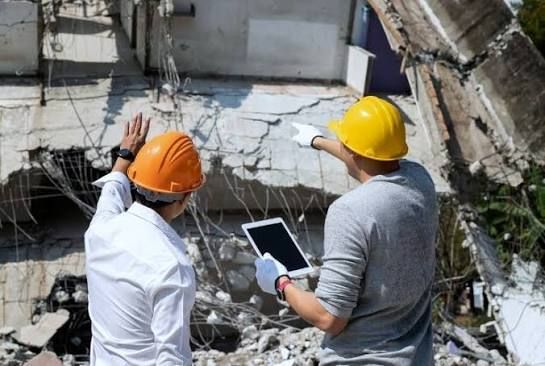
Structural failure is rarely a sudden mystery. In most cases, collapse is the final visible stage of a long chain of hidden technical events. Forensic engineering exists to uncover those events with precision, discipline, and evidence-based reasoning. It separates assumption from fact and replaces speculation with measurable truth.
When a structure fails, attention often shifts immediately to blame. Public discussion focuses on contractors, engineers, or materials before any technical investigation is complete. This reaction is understandable, yet it is dangerous. Without forensic analysis, the real cause of failure may remain hidden, allowing similar collapses to occur again.
Forensic engineering therefore serves a deeper professional duty. It protects life not only by explaining past failures but also by preventing future ones. Every properly investigated collapse becomes technical knowledge that strengthens design practice, construction control, and regulatory enforcement.
The Meaning and Scope of Forensic Engineering
Forensic engineering is the scientific investigation of structural performance, distress, and collapse. Its objective is not merely to describe what failed but to determine why failure occurred and how it progressed through the structure. This distinction is critical because visible damage rarely represents the initiating cause.
The discipline combines structural analysis, materials science, geotechnical engineering, and construction practice. Investigators must reconstruct the real behaviour of a structure under actual loads, not assumed design conditions. They evaluate drawings, calculations, site records, and physical evidence simultaneously, forming conclusions only when all sources align.
Unlike routine design work, forensic engineering works backward. Design predicts behaviour before construction. Forensic investigation explains behaviour after distress or collapse. This reverse process demands caution, neutrality, and strict adherence to evidence.
Categories of Structural Failure
Structural failures generally fall into identifiable technical categories, although real events often involve several interacting mechanisms. Understanding these categories guides the investigative process and prevents premature conclusions.
Design-related failures occur when analysis assumptions, load estimations, or detailing decisions are incorrect. Examples include underestimated loads, inadequate reinforcement, ignored second-order effects, or improper stability modelling. Such failures originate before construction begins.
Construction-related failures arise from deviations between drawings and reality. Poor concrete strength, misplaced reinforcement, inadequate curing, or dimensional errors can significantly reduce structural capacity. Even a perfectly designed structure can fail if construction quality is compromised.
Material-related failures involve defective or deteriorated materials. Low-strength concrete, brittle steel, corrosion damage, or chemical attack may progressively weaken members until collapse occurs.
Geotechnical failures originate in the ground rather than the superstructure. Bearing capacity failure, excessive settlement, slope instability, or liquefaction can undermine otherwise sound structural systems.
Operational or accidental failures result from loads beyond design intent. Overloading, impact, explosion, fire, or unauthorized structural modifications frequently trigger collapse in existing buildings.
True forensic conclusions often reveal combined causation, where small deficiencies in several areas interact until safety margins disappear.
Methodology of Structural Failure Investigation
A rigorous forensic investigation follows a structured technical sequence. Skipping steps or forming early opinions can permanently distort conclusions.
1. Site Documentation and Evidence Preservation
The first responsibility is to document the collapse scene before disturbance. Photographs, measurements, drone surveys, and debris mapping capture information that cannot be recreated later. Load paths, crack patterns, and failure surfaces often reveal the collapse sequence.
2. Collection of Design and Construction Records
Investigators obtain drawings, structural calculations, geotechnical reports, material test results, and site instructions. Differences between intended design and actual construction frequently expose the root cause of failure.
3. Material Testing and Laboratory Analysis
Concrete cores, steel samples, and soil specimens undergo laboratory testing to determine real properties. Measured strengths often differ significantly from specified values, directly affecting capacity calculations.
4. Structural Re-analysis
Engineers recreate the structure analytically using verified dimensions, loads, and material properties. Modern finite-element modelling may be required to simulate nonlinear behaviour, instability, or progressive collapse.
5. Collapse Sequence Reconstruction
Failure rarely occurs everywhere at once. Investigators determine the first failing element, then trace how load redistribution triggered subsequent failures. This chronological reconstruction distinguishes primary causes from secondary damage.
6. Peer Review and Technical Validation
Final conclusions must withstand independent professional scrutiny. Peer review ensures that findings are technically defensible, unbiased, and consistent with physical evidence.
Common Technical Causes Revealed by Forensic Studies
Historical forensic investigations across the world reveal recurring structural weaknesses. These patterns provide powerful lessons for modern engineering practice.
One frequent cause is underestimation of loads, particularly imposed loads, wind effects, or construction-stage loading. Temporary loads during construction often exceed final design loads, yet they are sometimes ignored in analysis.
Another recurring issue is inadequate structural robustness. When a single member fails and the structure lacks alternate load paths, progressive collapse can follow. Robustness design is therefore essential, not optional.
Detailing deficiencies also appear repeatedly. Insufficient anchorage length, poor confinement reinforcement, or weak shear resistance can create brittle failure modes without warning.
Forensic evidence further shows the severe impact of construction deviations. Small dimensional errors, reduced reinforcement diameter, or improper concrete curing may reduce safety margins below acceptable limits.
Finally, foundation-related distress remains a major contributor to collapse, particularly where soil investigation is incomplete or groundwater conditions change after construction.
The Role of Eurocode Principles in Failure Interpretation
Eurocode design philosophy provides an essential framework for forensic evaluation. Partial safety factors, load combinations, and limit-state checks define the intended reliability level of structures. When failure occurs, investigators examine whether these principles were correctly applied.
If design complied fully with Eurocode requirements yet collapse still occurred, attention shifts toward construction quality, material properties, or unforeseen actions. Conversely, deviation from Eurocode provisions may directly explain inadequate resistance or stability.
Eurocode robustness requirements, including accidental load considerations and tie-force provisions, are particularly important in progressive collapse investigations. Absence of these measures often appears in forensic findings.
Thus, forensic engineering does not operate outside design codes. It uses them as benchmarks for expected safety performance.
Professional, Legal, and Ethical Dimensions
Structural failure investigations extend beyond technical analysis. They influence legal responsibility, insurance claims, regulatory reform, and public safety policy. Engineers involved in forensic work must therefore maintain strict professional neutrality.
Bias toward any stakeholder—designer, contractor, or owner—undermines credibility and may conceal the true cause of failure. Ethical forensic practice demands conclusions based solely on evidence and engineering science.
Furthermore, the profession carries a moral obligation to share lessons learned. Each investigated collapse should inform improved codes, better detailing rules, and stronger construction oversight.
Preventing Future Failures Through Forensic Engineering
The ultimate value of forensic engineering lies in prevention. Every identified failure mechanism becomes guidance for safer future design and construction.
Improved site supervision, stricter material testing, robust structural systems, and accurate load assessment all emerge directly from forensic lessons. Modern structural reliability theory itself evolved largely from historical failure investigations.
Digital monitoring, structural health sensors, and data-driven inspection now offer new tools for early detection of distress. These technologies represent the future extension of forensic thinking, from post-failure investigation to pre-failure prevention.
Also See: Forensic Engineering – Guidelines for Failure Investigations
Conclusion
Forensic engineering transforms structural failure from tragedy into knowledge. It demands patience, scientific discipline, and unwavering commitment to truth. Without it, collapses would remain unexplained, and the same technical mistakes would continue repeating across generations of construction.
Every failed structure carries a hidden technical narrative. The duty of forensic engineering is to uncover that narrative completely, honestly, and rigorously. In doing so, it protects not only the reputation of the profession but the safety of society itself.
