This article explains principles, design methodologies, analysis techniques, failure modes, code provisions, and practical strategies against the disproportionate collapse of structures.
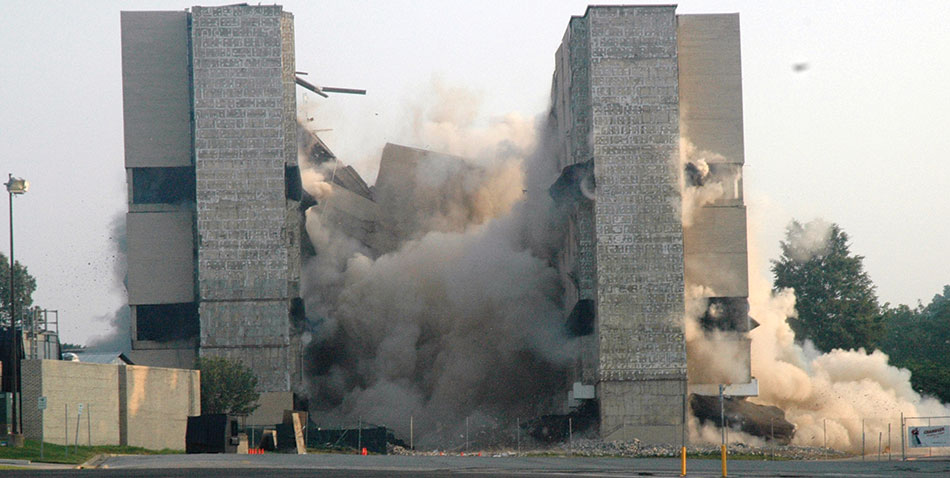
Designers increasingly face threats from abnormal loads like blasts or impacts. Buildings suffer localized damage due to explosions, vehicle collisions, or terrorist attacks. Such damage may trigger collapse far larger than original localized damage. Engineers must anticipate disproportionate collapse under extreme events. They must ensure structures resist progressive failures beyond initial damage.
Disproportionate collapse occurs when failure of a small structural element leads to wider structural degradation. A damaged column, beam, or connection may trigger cascade failures in neighboring components. Energy from a blast or impact travels through connections, amplifying damage. Designers need strategies to stop damage propagation early. They must balance safety, economy, and usability under rare but severe threats.
This article explains principles, design methodologies, analysis techniques, failure modes, code provisions, and practical strategies. It guides engineers in evaluating and designing structures that remain stable under blast or impact loading, highlights necessary parameters, modeling strategies, and ethical obligations. It aims to equip readers to design robust structures that resist disproportionate collapse.
Fundamentals of Disproportionate Collapse under Extreme Loads
Definition and Concepts
Disproportionate collapse refers to structural failure far greater than initiating damage. It differs from collapse matching damage size. It includes progressive collapse, where collapse spreads beyond initial failure. Blast or impact load may remove or damage primary load-bearing elements suddenly. Such removal triggers alternative load paths and redistributes forces.
Designers must account for both threat-independent and threat-dependent collapse scenarios. Threat-independent methods assume sudden removal of structural elements without specific cause. Threat-dependent approaches model the actual blast or impact event. These model damage initiation realistically. They capture dynamic effects, multiple damaged elements, and real boundary conditions. Researchers warn that threat-independent methods may overestimate robustness.
Why Blast and Impact are Special
Blast and impact loads differ from static or quasi-static loads. They typically have very short durations and high peak pressures or impulses. Structures respond dynamically, not statically. Design must account for strain-rate effects in materials, inertia, and possibly shock wave reflection. Material strength under impact or blast loads may increase in some cases (strain-rate enhancement), but connections and joints often weaken under sudden deformation.
Blast loading may remove or severely damage more than one element simultaneously. It may generate pressure waves through facade, glazing, or non-structural components, which then affect internal members. Impact loads (vehicle, missile, or object impact) may impose localized damage but cause global effects if critical elements yield or fracture. Therefore, designers must consider multiple failure modes concurrently.
Key Design Principles for Disproportionate Collapse Resistance
To design structures resilient to disproportionate collapse under blast or impact, engineers apply several principles.
Redundancy and Alternate Load Paths
Design structural systems with multiple paths for load transfer. If one element fails, adjacent elements should carry redistributed load. Redundancy mitigates collapse. Alternative load path (ALP) design simulates the removal of primary members. Engineers test whether remaining structural system supports loads safely. Codes or guidelines require ALP for certain risk categories.
Ductility and Energy Dissipation
Structures should deform without brittle failure. Ductile design allows release of energy during blast or impact. Designers use materials and detailing that support large deformations. Beam-to-column connections must sustain moment and axial interactions under catenary action. They must not fracture suddenly. Reinforcing steel and joint capacity are critical.
Robust Connections and Key Elements
Connections often fail first under dynamic loads. Designers must over-strengthen connections relative to elements. They must ensure column bases, beam ends, and support joints remain intact even when adjacent elements yield. Key load-bearing elements may require specialized reinforcement. Engineers often design some primary members for blast loads. They ensure columns carrying heavy loads resist sudden removal of other columns.
Predicting and Limiting Initial Damage
Engineers seek to reduce the probability, extent, or severity of initial damage. That may include protective barriers, increased standoff distances, blast walls or shields. They may choose materials or sections that resist penetration or fracture. They may design facades, cladding, glazing to absorb or deflect blast effects before structural framing suffers. Limiting initial damage reduces likelihood of progressive collapse.
Capacity for Load Redistribution
After damage or loss, the structure must redistribute forces safely. Beams may convert bending into catenary action under large deformation. Columns may assume additional loads. Slabs or diaphragms may act as load distributors. Designers must ensure enough strength and stiffness in non-primary members to carry redistributed loads. Provisions for large deflections, tension, and axial forces in members matter.
Time-Dependence and Dynamic Effects
Blast and impact yield time-dependent behaviour. Inertial forces, wave propagation, material strain-rate effects impact stress states. Designers must model dynamic amplification. Duration of blast (positive phase), rise time, pressure pulse shape matter. Short impulse may act like sudden load; longer loads more quasi-static. Designers must distinguish between impulsive, quasi-static, and dynamic cases.
Analysis Methods and Modeling Techniques
Design for disproportionate collapse requires rigorous analysis. Engineers use analytical, numerical, and empirical methods.
Threat-Independent Methods
Threat-independent methods assume sudden removal (i.e., virtual removal) of one or more structural members. Designers then analyse alternate load paths. They check whether remaining structure carries loads without collapse. Codes often accept this method, as it simplifies design. Since it does not model blast or impact explicitly, threat-independent analysis may not capture realistic damage patterns.
Threat-Dependent Methods
Threat-dependent methods explicitly model blast or impact load events. They derive pressure, impulse, or dynamic load history based on explosive charge, standoff, impact mass, and velocity. They map initial damage to multiple structural members. Then perform dynamic progressive collapse analysis. This method captures realistic damage, neighbouring member degradation, and velocity or displacement effects. Engineers find threat-dependent methods more accurate under heavy blast loads.
Finite Element and Time-History Simulations
Engineers build detailed finite element (FE) models of structure, including beams, columns, joints and non-structural elements. By including material nonlinearity: yielding, fracture, strain-rate behaviour. behaviour. Applying blast or impact loads with correct load-time curves. They simulate explosions via empirical formulas (e.g., Kingery-Bulmash) or blast codes. They run time-history dynamic analysis. And they observe damage progression, deflections, failure modes.
Simplified Empirical or Semi-Analytical Models
For preliminary design or when detailed data lack, engineers use simplified models. They may treat structure as rigid or lumped mass, idealize damaged region, or use single-degree-of-freedom (SDOF) systems. They may calculate demand/capacity ratios (DCR) for critical columns or beams. And also may use approximate steps to evaluate residual strength or capacity after damage. These models help size elements, but designers must check with more advanced analysis.
Failure Modes under Blast and Impact
Understanding failure modes helps designers anticipate collapse mechanisms.
Column Loss
Explosion or impact may remove or severely damage a primary column. That loss often starts progressive collapse. Vertical load redistributes to adjacent columns, beams, or girders. These may not handle extra load, causing further failures. Attention to column capacity and redundancy is essential.
Beam-to-Column Connection Failure
Connections may fracture, yield, or lose stiffness under dynamic moments and axial loads. Failed connections compromise alternate load paths. They can allow beams to detach or sag, increasing deformation and load concentration. Designers with blast resistance must strengthen connections.
Catenary Action and Membrane Action
After large deformation, beams or slabs may act like cables (catenary action), carrying loads through axial tension instead of bending. Slabs may develop membrane action, carrying loads across damaged zones. These modes require high ductility and continuity. They involve large displacement, yielding in tension, and strong connections. (American Institute of Steel Construction)
Shear and Direct Shear Failures
Blast may impose high shear stresses suddenly. Column members under combined axial load and shear may fail in shear before yielding in flexure. Beams with large shear demand may spall or crack. These failures are brittle and dangerous. Designers need to check shear capacity under blast-rate loads. (SpringerLink)
Local vs Global Damage
Local damage refers to damage in small zones (one member or facade). Global damage refers to widespread collapse or large parts of the structure collapsing. Blast and impact may cause both. Designers must consider worst-case local damage that could propagate to global failure. (SAGE Journals)
Code Provisions, Guidelines, and Standards
Design for disproportionate collapse under blast or impact loads relies on codes and published guidelines.
Eurocode and Structural Robustness
European codes define robustness and accidental actions. Eurocode 1, Part 1-7 (Actions on structures – General actions – Accidental actions) requires structures avoid collapse disproportionate to initiating event. Designers must consider accidental actions such as blasts, vehicle impact, or fire. Codes ask for redundancy, alternative load paths, and robust structural design.
U.S. Standards: UFC, ASCE, GSA
United States uses Unified Facilities Criteria (UFC), ASCE guidelines, and GSA standards for blast load design. UFC provides blast load tables, standoff distances, and detailed design criteria. ASCE publishes “Progressive Collapse Basics” and guidelines for column removal, detailing alternative load paths, ductility, connection capacity. GSA provides federal building design standards for blast/impact resistance and robustness.
Key Documents and Research Reports
Recent research explores effectiveness of buckling-restrained braces, steel composite systems, and RC frames under blast loading. Studies examine threat-dependent analysis, dynamic load histories, and residual capacities of damaged members. Some documents recommend use of demand capacity ratios (DCR) to quantify vulnerability.
Practical Design Workflow
Designing to resist disproportionate collapse under blast or impact requires a systematic workflow.
Threat Identification and Hazard Assessment: Define possible blast or impact scenarios. Determine sources, charge weights, vehicle speeds, standoff distances, impact masses and velocities. Classify building category (importance, occupancy).
Load Definition: Compute blast pressures or impact loads. Use empirical models (e.g Kingery-Bulmash), validated software or standards. Include impulse, peak pressure, duration. For impact, consider momentum, energy, contact area.
Structural System Assessment and Redundancy Layout: Design or evaluate structural layout. Ensure redundancy: multiple supports, alternative paths. Avoid single failure points. Provide tie-beams, transfer girders or trusses if needed.
Member and Connection Design: Select materials and cross sections that can handle dynamic stress, strain-rate effects, large deformation. Detail beam-column joints, splice locations, connections for ductility. Provide reinforcement for catenary and membrane action.
Dynamic Analysis: Build models for dynamic or time-history simulation. Possibly 3D finite element models including non-structural elements and connections. Simulate blast or impact with realistic load histories. Evaluate spread of damage, residual stiffness, and capacity after initial damage.
Progressive Collapse / Alternate Load Path Analysis: Remove or degrade elements as per design scenarios. Simulate collapse paths. Ensure structure can survive element loss. Check both local damage and global collapse. Use load redistribution, catenary behaviour, etc.
Safety Factors and Performance Criteria; Define performance levels: Life safety, collapse prevention, immediate occupancy. Assign safety factors to account for uncertainties: material behaviour, load estimation, damage patterns.
Design for Repairability and Mitigation: Make provision for inspection, repair, and reinforcement. Use materials and connections that allow replacement or retrofitting. Design facades or claddings to fail safely. Provide barriers or standoff distances.
Verification by Testing and Monitoring: Where possible, test connections, small scale or component tests. After construction, monitor with sensors: displacements, accelerations, damage progression. Ensure deviations fall within acceptable bounds.
Conclusion
Designing to resist disproportionate collapse under blast or impact demands deep understanding of structural behaviour, materials, connections, and dynamic loads. Engineers must adopt redundancy, ductility, robust connections, capacity for load redistribution, and detailed modelling. They must consider threat-dependent scenarios realistically. Codes and guidelines provide frameworks, but judgment and context remain crucial.
Also See: Designing for the Unexpected: Why Robustness is More than a Code Requirement
Sources & Citations
- United States Department of Defense. (2009). Unified Facilities Criteria (UFC) 4-023-03: Design of Buildings to Resist Progressive Collapse. Washington, DC: U.S. Government. Whole Building Design Guide+1
- ASCE/SEI Standard 7-22: Minimum Design Loads and Associated Criteria for Buildings and Other Structures. American Society of Civil Engineers. asce.org
- Methods for progressive collapse analysis of building structures under blast and impact loads.” (2024). Applied Mechanics, 4(4), 696-716. Amir Siah Mansour, Seyed Azim Hosseini, Hossein Maleki Toulabi. OUCI
- Progressive Collapse Analysis of RC Frames Subjected to Blast Loading. (2006). Australian Journal of Structural Engineering, 7(1), 47-55. tandfonline.com
- Distributed Column Damage Effect on Progressive Collapse Vulnerability in Steel Buildings Exposed to an External Blast Event.” Journal of Performance of Constructed Facilities. ascelibrary.org
