This article sets out a detailed overview of construction considerations for jetties and marine platforms, focusing on sequencing, tolerances, temporary conditions, quality control, and structural risk
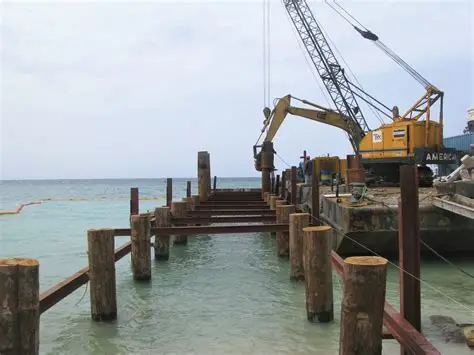
The construction of jetties and marine platforms presents challenges that differ fundamentally from land-based structures. Access constraints, tidal variation, environmental exposure, and reliance on temporary stability measures combine to create a construction environment with limited tolerance for error. Many structural failures associated with jetties do not arise from incorrect design, but from breakdowns in execution, sequencing, or control during construction.
Unlike buildings, jetties often rely on their permanent structural system for stability from the earliest stages. Temporary works may provide limited restraint, but the permanent piles, deck, and connections usually govern stability throughout construction. As a result, construction methodology must align closely with structural assumptions made during design, even where those assumptions were not explicitly stated.
This article sets out a detailed overview of construction considerations for jetties and marine platforms, focusing on sequencing, tolerances, temporary conditions, quality control, and structural risk. It references relevant Eurocode principles where they influence construction decisions and long-term performance.
Construction Sequence and Structural Assumptions
Successful jetty construction begins with a clear understanding of the structural assumptions embedded in the design. These assumptions often relate to pile fixity, deck continuity, load sharing, and stiffness development over time.
Design calculations typically assume fully installed piles acting together through a completed deck system. During construction, this condition does not exist. Partial systems may behave very differently from the completed structure. Construction planning must therefore identify critical stages where stability, strength, or serviceability margins reduce significantly.
EN 1990 requires that structures remain safe during execution, even where temporary design situations govern. This principle applies directly to marine structures, where incomplete systems may experience environmental actions comparable to permanent conditions.
Construction sequencing must therefore form part of the structural safety strategy rather than being treated as a logistical issue alone.
Site Investigation and Pre-Construction Verification
Marine construction relies heavily on accurate ground and environmental data. Errors in assumed seabed level, soil stratification, or obstructions can compromise pile installation and alignment.
Before construction begins, contractors should verify seabed levels, sediment conditions, and obstructions through surveys consistent with the geotechnical model used in design. EN 1997-1 emphasises the importance of ground verification during execution, particularly where design relies on assumed parameters.
Changes in ground conditions may require adjustment of pile penetration depth, installation method, or tolerance criteria. These changes must receive structural review to ensure that axial and lateral capacities remain adequate.
Failure to reconcile site conditions with design assumptions frequently leads to pile overstressing or unacceptable deflection.
Pile Installation Methods and Structural Implications
Pile installation represents the most structurally critical construction activity for most jetties. Installation method influences pile capacity, alignment, residual stress, and long-term behaviour.
Driven piles introduce installation stresses and may alter soil properties around the pile. These effects influence lateral stiffness and axial resistance. Bored piles reduce vibration but introduce risks related to bore stability, concrete quality, and shaft integrity.
During installation, piles often act as cantilevers with minimal lateral restraint. Wind, wave, and current actions may induce significant bending during this stage. Temporary bracing or staged installation sequences may be required to limit pile stresses.
Construction planning must recognise that pile capacity under EN 1997-1 refers to the completed condition, not intermediate stages.
Pile Alignment, Tolerances, and Accumulated Effects
Pile alignment tolerance plays a critical role in jetty performance. Small angular deviations at pile heads translate into significant offsets at deck level, particularly for tall piles.
Eurocodes do not prescribe explicit marine pile tolerances, but EN 1090 and EN 1992 execution standards provide guidance on acceptable deviations. These tolerances must align with the structural model assumptions.
Accumulated misalignment can introduce unintended bending moments, reduce axial capacity, and increase deck stresses. Excessive correction through forced alignment may damage piles or connections.
Construction teams should monitor pile position continuously and intervene early rather than relying on post-installation correction.
Temporary Stability During Pile Installation
Temporary stability during pile installation often governs construction risk. Individual piles provide little lateral resistance before connection to the deck or bracing system.
Environmental actions during construction may approach or exceed those assumed for permanent design. Wind and wave conditions do not pause for incomplete structures.
Temporary frames, walers, or tie systems may be required to provide lateral restraint until sufficient piles interconnect. These systems constitute temporary works and must receive appropriate design verification.
EN 1990 recognises temporary design situations explicitly, requiring safety under realistic construction actions.
Deck Construction and Load Introduction
Deck construction represents the point at which the structural system begins to act collectively. However, deck loads apply progressively rather than instantaneously.
For reinforced concrete decks, wet concrete imposes significant temporary loads before composite action develops. Falsework, shutters, and temporary supports may carry loads not considered in permanent design.
Construction sequences that pour deck segments asymmetrically introduce torsion and uneven pile loading. Designers often assume uniform deck stiffness that does not exist during early stages.
Construction planning must therefore control pour sequence, temporary propping, and load introduction to avoid overstressing piles or connections.
Connection Detailing and Execution Quality
Connections between piles and deck elements represent critical structural interfaces. Construction quality at these locations governs long-term performance.
For concrete connections, reinforcement continuity, cover, and compaction must achieve the design intent. Poor execution increases crack width, accelerates chloride ingress, and reduces durability.
For steel connections, fit-up tolerances, bolt tightening, and weld quality affect load transfer. Marine environments amplify the consequences of minor defects.
Execution standards under EN 13670 for concrete and EN 1090 for steel provide minimum requirements, but marine exposure often justifies higher control levels.
Environmental Exposure During Construction
Marine construction exposes partially completed structures to aggressive conditions before protective systems are fully in place. Concrete elements may experience early-age chloride exposure. Steel elements may remain unprotected for extended periods.
Temporary protection strategies should address these risks. Delays between installation and permanent protection increase long-term corrosion potential.
EN 1992-1-1 highlights the importance of early-age durability measures where exposure begins before completion.
Ignoring early exposure frequently undermines otherwise robust durability design.
Monitoring, Survey, and Verification
Construction monitoring plays a vital role in ensuring alignment between design assumptions and actual behaviour. Survey of pile positions, deck levels, and deflections provides early warning of deviations.
Instrumentation may be justified for larger jetties, particularly where lateral deflection governs design. Monitoring allows adjustment of construction sequence before damage occurs.
EN 1990 encourages verification where structural behaviour remains sensitive to execution effects.
Temporary Loads and Construction Equipment
Construction equipment often imposes loads exceeding permanent operational loads. Cranes, piling rigs, concrete pumps, and material storage introduce high local forces.
Designers may not have considered these loads explicitly. Construction teams must assess whether temporary loads exceed design assumptions and seek review where necessary.
Temporary loading conditions frequently govern deck strength during construction rather than permanent use.
Quality Control and Documentation
Quality control systems provide traceability and confidence in execution. Material certification, pile driving records, concrete test results, and inspection reports form part of the structural record.
These records support future assessment, maintenance, and modification. Marine structures often require early intervention, and construction records enable informed decisions.
Eurocode execution standards emphasize documentation as part of structural reliability.
Long-Term Implications of Construction Decisions
Construction decisions influence long-term performance more than many designers anticipate. Small deviations, early exposure, or temporary overstressing often accelerate deterioration.
Marine structures rarely enjoy generous maintenance budgets. Construction quality therefore becomes the primary defence against premature degradation.
Recognising this reality shifts focus from minimum compliance to robust execution.
Conclusion
The construction of jetties and marine platforms demands close alignment between design intent and execution reality. Temporary conditions, sequencing, and environmental exposure introduce risks that cannot be eliminated through calculation alone.
By treating construction as an extension of structural design, engineers and contractors can manage these risks effectively. Careful planning, realistic assumptions, and disciplined quality control remain essential to achieving durable and reliable marine structures.
Also See: Structural Design Aspects of Jetties and Marine Platforms
Sources & Citations
- EN 1990: Eurocode – Basis of Structural Design
- EN 1992-1-1: Design of Concrete Structures
- EN 1993-1-1: Design of Steel Structures
- EN 1997-1: Geotechnical Design
- EN 13670: Execution of Concrete Structures
- EN 1090: Execution of Steel Structures
