This article examines, in practical and construction-focused terms, why concrete cube tests fail even when the specified grade appears correct.
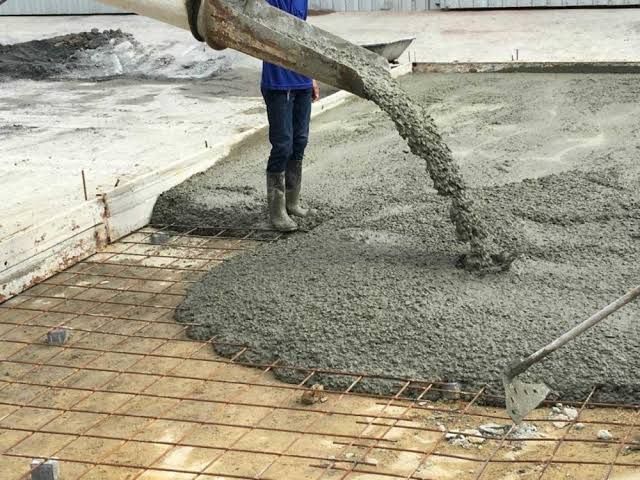
Concrete strength failure remains one of the most persistent problems on construction sites, regardless of project size or location. Structural drawings clearly specify concrete grades such as C20/25, C25/30, or C30/37, mix designs are approved, materials are delivered, and cube tests are carried out—yet results frequently fall short of the required characteristic strength. When this happens, panic follows. Meetings are called. Blame is distributed liberally. Laboratories are accused. Engineers are questioned. Contractors feel attacked.
In most cases, however, the reason for failure is neither hidden nor complex.
Concrete strength does not fail because the specified grade was unrealistic. It fails because the construction process did not meet the assumptions embedded within that grade. Concrete grades are not promises; they are conditional performance requirements. Once those conditions are violated, failure becomes inevitable.
The uncomfortable truth is that many construction sites treat concrete as a forgiving material. It is not. Concrete is remarkably sensitive to water content, compaction quality, curing conditions, and timing. Small deviations produce large consequences. Cube test failures are simply the measurable evidence of those deviations.
This article examines, in practical and construction-focused terms, why concrete cube tests fail even when the specified grade appears correct. The emphasis is deliberately placed on site practices rather than design theory, because design rarely causes these failures—execution does.
What a Concrete Grade Really Represents
Concrete grades such as C20/25 are frequently misunderstood. They are often treated as labels rather than performance criteria. In reality, a concrete grade defines a statistical strength requirement, not a guaranteed outcome. For C20/25, the characteristic cube strength of 25 MPa means that no more than 5% of properly produced, cured, and tested samples should fall below that value at 28 days.
This definition assumes strict compliance with several conditions:
- Correct cement content
- Controlled water–cement ratio
- Proper aggregate grading
- Adequate mixing
- Correct placement
- Effective compaction
- Continuous curing
If any one of these conditions is violated, the statistical basis of the grade collapses. The concrete no longer matches the assumptions under which the strength class was defined.
On many sites, concrete grade is treated as a purchasing instruction rather than a process requirement. Once the delivery note says “C25,” everyone assumes the obligation has been fulfilled. This misunderstanding is at the heart of most cube failures.
Excess Water: The Silent Strength Killer
Excess water remains the most common and most damaging cause of concrete strength failure. It is added for convenience, not necessity. Workers add water to improve workability, to ease pumping, to compensate for delays, or simply to make the concrete easier to place. Each of these decisions weakens the concrete.
Concrete strength is fundamentally controlled by the water–cement ratio. Increasing this ratio increases porosity in the hardened concrete. That porosity reduces compressive strength, durability, and long-term performance. Once excess water is added, the damage is irreversible.
A concrete mix designed for a water–cement ratio of 0.50 may easily be pushed to 0.65 or higher through casual site adjustments. This single act can reduce compressive strength by 20–40%. No curing regime can recover that loss. No additional time can compensate for it. The concrete has already been compromised.
Cube specimens cast from this weakened mix will fail honestly. The test does not punish the concrete; it exposes the truth of what was placed.
Workability Myths and Slump Abuse
One of the most persistent misconceptions on site is that slump and strength are independent properties. They are not. Increasing slump by adding water directly reduces strength unless compensated with additional cement or admixtures, which rarely happens on site.
Rather than using approved plasticisers or adjusting mix proportions properly, water becomes the default solution. This habit persists even on projects with clear specifications and supervision. Once water is added informally, all quality control assumptions become invalid.
Concrete grades are designed around controlled workability. Changing workability without redesigning the mix is not adjustment—it is degradation.
Poor Batching and Material Variability
Inconsistent batching is another major contributor to strength failure. On many sites, particularly small to medium projects, batching remains manual. Cement quantities vary. Aggregates are poorly graded. Moisture content in sand is ignored. These variations produce unpredictable strength outcomes.
Even with batching plants, problems persist. Calibration errors, material substitutions, and changes in aggregate sources alter the effective mix. A mix design approved using one sand grading may fail when a finer or dirtier sand is used without adjustment.
Concrete grades rely on consistency. Strength failure is often not the result of one bad batch, but of many slightly wrong batches combined.
Compaction: Strength Lost Through Entrapped Air
Concrete gains strength through density. Proper compaction removes entrapped air and ensures full contact between cement paste and aggregates. When compaction is inadequate, voids remain, reducing strength significantly.
Each percentage of entrapped air can reduce compressive strength by approximately five percent. Poor vibration technique, insufficient vibration duration, congested reinforcement, or faulty equipment all contribute to this problem.
On many sites, vibration is rushed. Operators move poker vibrators too quickly, withdraw them prematurely, or fail to penetrate previous layers. In deep pours, vibration may be entirely ineffective at the lower levels.
Cube specimens cast without proper compaction fail even when the concrete itself might have passed under correct handling. Again, the cube is not the problem—the process is.
Curing: The Forgotten Stage of Concrete Strength
Concrete strength development depends on hydration, which requires moisture and time. Without curing, hydration stops early, and strength development stalls permanently. This fact is well understood academically but routinely ignored on site.
Curing is often treated as optional or cosmetic. Water curing is shortened. Surfaces are left exposed. Formwork is removed too early. In hot climates, this neglect becomes particularly destructive.
Concrete that is allowed to dry out during its early life will never reach its design strength. Cube specimens cured under better conditions may pass, while the structure remains weak—or vice versa. Either scenario creates confusion and disputes.
Curing is not a finishing activity. It is a structural requirement.
Cube Casting Errors and Testing Discipline
Cube tests themselves are frequently compromised. Cubes are sometimes cast by untrained personnel, poorly compacted, incorrectly labelled, or exposed to harsh conditions before testing.
Specimens left in the sun, allowed to dry, or mishandled during transport lose strength. Laboratories test what they receive. When results are low, the failure is blamed on testing rather than preparation.
Cube testing begins on site, not in the laboratory. Poor testing discipline produces misleading results and undermines confidence in structural quality.
Time Delays and Re-tempering
Concrete is time-sensitive. Delays between batching and placement reduce workability and initiate early setting. When this happens, water is often added to “revive” the concrete. This practice is destructive.
Re-tempered concrete has weakened cement paste, disrupted bonding, and reduced ultimate strength. Even aggressive vibration cannot repair this damage.
Cube specimens cast from re-tempered concrete accurately reflect this weakness. The failure is not mysterious. It is mechanical and chemical.
Specifying Grades Beyond Site Capability
Higher concrete grades demand tighter control. They are less forgiving of errors in water content, curing, and compaction. Sites struggling to achieve C20/25 will perform worse with C30/37, not better.
Many cube failures occur because the specified grade exceeds what the site can reliably deliver. This mismatch is not solved by specification alone. It requires improved supervision, training, equipment,
and discipline.
Concrete grades must align with site capability, not optimism.
Conclusion
Concrete cube test failures are not random events. They are predictable outcomes of poor construction practice. When specified grades fail, the cause is almost always excess water, inconsistent batching, inadequate compaction, poor curing, careless testing, or time-related abuse. Concrete does not fail arbitrarily. It behaves exactly as physics and chemistry dictate. Cube tests not punish concrete; they reveal what was actually built.
Also See: Mix Design: Principles, Calculations and a Worked Example
Sources & Citations
- EN 206:2013+A2:2021 — Concrete – Specification, performance, production and conformity
- BS 8500-1:2015+A2:2019 — Concrete – Complementary British Standard to EN 206
- EN 12390-3:2019 — Testing hardened concrete – Compressive strength of test specimens
- Neville, A.M. — Properties of Concrete, Pearson Education
- ACI Committee 318 — Building Code Requirements for Structural Concrete (ACI 318)
