This article explains crane safety in practical terms. It describes common crane types, how they work, and the main risks involved.
Cranes appear on almost every large construction site, yet many people working around them do not fully understand how they operate. For those new to construction, cranes can seem intimidating machines that move heavy loads effortlessly across busy sites. Understanding what different cranes do, and why they are used, helps everyone work more safely around them.
Crane-related accidents continue to occur despite improvements in equipment and training. These incidents rarely happen because a crane “suddenly fails.” They usually result from poor planning, incorrect crane selection, or unsafe working practices. When teams understand cranes better, they make better decisions.
This article explains crane safety in practical terms. It describes common crane types, how they work, and the main risks involved. It also explains how planning, ground conditions, and competence influence safe crane use.
What Is a Crane and What Does It Do?
A crane is a mechanical device designed to lift, lower, and move loads horizontally. It uses a combination of a boom or jib, hoisting mechanisms, and counterweights to stay stable. Cranes allow construction teams to handle loads far heavier than any manual method could manage.
Every crane has a rated lifting capacity. This capacity depends on the load weight and the distance from the crane. As the load moves farther away, the crane’s safe capacity reduces. This relationship explains why cranes overturn when operators exceed limits.
Most cranes rotate around a vertical axis. This movement allows loads to travel across the site without relocating the crane. However, rotation also introduces risks when cranes work near buildings or other cranes.
Types of Cranes used on Construction Sites
Construction projects use several crane types, each suited to specific tasks and environments. Understanding these differences provides useful context for risk management.
Mobile cranes offer flexibility and rapid mobilisation. They suit short-duration lifts but rely heavily on outriggers and ground conditions.
Crawler cranes provide improved stability on soft ground through tracked movement. They often handle heavier loads but require significant space and preparation.
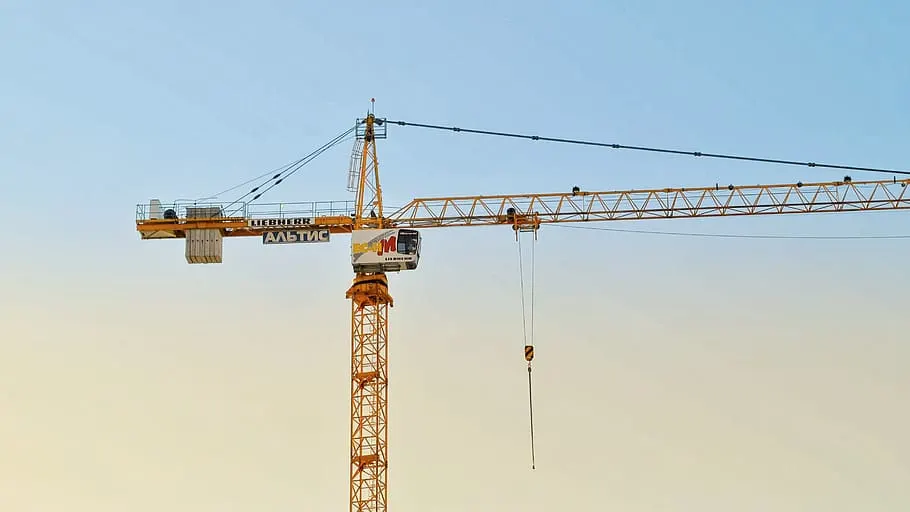
Tower cranes dominate high-rise and urban projects. They provide height and reach while occupying limited ground area, but require engineered foundations and long-term stability measures.
Self-erecting tower cranes support smaller projects with quicker setup, though they have limited capacity and reach.
Each crane type introduces distinct hazards. Selecting the wrong crane increases risk regardless of operator skill.
Crane Operations Demand Special Attention
Crane operations combine several high-risk elements into one activity. They involve heavy loads, mechanical systems, variable ground conditions, and human interaction, often in constrained environments. When one element fails, the consequences can be severe.
A falling load may strike workers or damage critical structures. A crane overturning can result in fatalities and extensive site damage. Even minor incidents, such as a load striking scaffolding, can halt work and cause costly delays.
Unlike many construction activities, crane operations leave little margin for error. Loads move overhead, and people often work nearby. The energy involved means that mistakes escalate quickly.
Crane safety therefore requires a higher level of planning and control than many other site activities. Treating lifting as routine work increases risk significantly.
How Crane Accidents Usually Happen
Crane accidents rarely stem from a single catastrophic failure. They usually follow a sequence of smaller issues that compound over time. Understanding this sequence helps prevent repetition.
For example, a team may select a mobile crane late in the programme due to availability. The site has limited space, but no one reassesses crane positioning. Ground conditions appear firm, so no formal assessment takes place. During lifting, the crane operates close to capacity. One outrigger begins to settle, and the crane overturns.
Each decision seemed reasonable in isolation. Together, they created a dangerous situation.
In other cases, loads fall because teams rely on assumed weights. Drawings may not reflect temporary works, cast-in items, or moisture content. Slinging arrangements then fail to control the load adequately.
Crane safety improves when teams focus on systems, not blame. Asking how decisions interact often reveals hidden risks.
Planning and Design Coordination
Safe crane operations begin during early project planning. Designers, clients, and contractors all influence how lifting occurs, even if they never operate a crane directly.
Structural designers may specify large prefabricated elements to improve buildability. While efficient, these elements may require complex lifts. Without early lifting consideration, teams may struggle to handle them safely on site.
Similarly, site layouts influence crane access and movement. Late design changes may restrict crane positions or reduce working space. These constraints often force unsafe compromises during construction.
Pre-construction information plays a critical role. It should identify known hazards such as overhead power lines, buried services, weak ground, or adjacent occupied buildings. This information allows the Appointed Person to plan lifts realistically.
Good planning reduces pressure during construction. When teams understand constraints early, they make safer decisions later.
Crane Siting and the Influence of the Site Environment
Crane siting directly affects stability, reach, and operational safety. Poor siting decisions remain a common factor in incidents.
The crane must reach both the pick-up and landing points safely throughout the lift. Capacity charts vary with radius, boom length, and configuration. Operating near limits increases sensitivity to small changes.
Site boundaries often restrict ideal crane positions. Adjacent structures may limit slewing, while access routes constrain setup. Teams must assess whether the proposed position allows safe operation under all conditions.
Clearances also matter. Jibs must avoid contact with buildings, scaffolding, and other cranes. On congested sites, jib clashes represent a serious risk that requires careful coordination.
Exclusion zones should protect workers from suspended loads. These zones must remain realistic and enforceable, not theoretical.
Ground Conditions: The Most Commonly Underestimated Risk
Ground conditions frequently determine whether crane operations remain safe. Despite this, teams often underestimate their importance.
Cranes impose significant loads onto the ground, especially through outriggers or tracks. These loads concentrate over relatively small areas. Ground that supports vehicles may still fail under crane loading.
Soft soils, made ground, backfilled trenches, and service routes all reduce bearing capacity. Excavations nearby further increase risk. Weather conditions, particularly prolonged rainfall, can rapidly worsen ground performance.
Visual inspection alone cannot confirm adequacy. Where uncertainty exists, geotechnical input becomes essential. Engineers may recommend load spreading systems, ground improvement, or alternative crane solutions.
Using mats, steel plates, or proprietary systems distributes loads and reduces ground stress. While these measures add cost, they remain insignificant compared to accident consequences.
Load Characteristics and Why Assumptions Fail
Understanding the load remains central to safe lifting. Weight, geometry, rigidity, and centre of gravity all influence behaviour during lifting.
Loads often behave differently once suspended. A component that appears balanced on the ground may rotate unexpectedly when lifted. Embedded steel, uneven reinforcement, or moisture variation can shift the centre of gravity.
Long or flexible components may deflect, changing load distribution. Flat elements such as cladding panels may catch wind, causing sway or rotation.
For example, lifting a large façade panel during moderate wind can introduce dynamic forces beyond static calculations. Teams must consider weather conditions and stop work when necessary.
Designers can improve safety by considering lifting during detailing. Providing clear lifting points and accurate weight information reduces on-site improvisation.
Planning Lifts and the Role of the Appointed Person
Every crane operation requires structured planning. The Appointed Person holds responsibility for developing and overseeing this plan.
This role includes selecting the crane, assessing risks, coordinating personnel, and ensuring compliance with regulations. The Appointed Person must remain competent and experienced.
A lifting plan provides the foundation for safe operation. It describes the crane configuration, load details, lift sequence, communication methods, and exclusion zones. It should also identify contingency measures.
Complex lifts require additional controls. Tandem lifts, lifts near live infrastructure, or lifts over occupied areas demand careful coordination and rehearsal.
A lifting plan only works if everyone understands it. Toolbox talks and briefings ensure that plans translate into safe actions.
Competence, Training, and Human Factors
Cranes do not operate themselves. People control every movement, decision, and response.
Operators must hold appropriate certification and understand the limits of their equipment. Experience improves judgment, but formal competence remains essential.
Slingers and signallers play a critical role in controlling load movement. Incorrect slinging or unclear signals frequently contribute to incidents.
Fatigue, time pressure, and distraction also influence safety. Long shifts and programme pressures increase the likelihood of mistakes. Supervisors must manage workloads realistically.
Daily pre-use inspections help identify defects early. If documentation or certification remains missing, the crane should not operate.
Communication and Visibility During Crane Lifting
Effective communication underpins every safe lift. Misunderstandings often lead to sudden, unsafe movements.
Standard hand signals provide consistency. Radios support complex lifts or restricted visibility. Everyone involved must understand the chosen system.
Blind lifts introduce additional risk. Where operators cannot see the load, teams should use additional signallers or camera systems. Lifting should stop if communication fails.
Visibility also affects workers near the lift. Clear signage and barriers help maintain exclusion zones and prevent accidental entry.
Working with Cranes Near Existing Structures and Infrastructure
Lifting near existing infrastructure increases complexity. Railways, highways, utilities, and occupied buildings require additional controls.
Oversailing loads may require formal agreements or physical protection. Engineers should assess risks early to avoid last-minute restrictions.
Underground services also influence crane stability. Service collapse can undermine ground support. Accurate service records and surveys guide safer siting decisions.
Emergency planning becomes particularly important in these environments. Teams must know how to respond if something goes wrong.
Also See: Understanding the Root Causes of Temporary Works Failure
Conclusion
Crane operations represent some of the highest-risk activities on construction sites, yet they remain essential to modern building. Most crane incidents remain preventable through better planning, informed decision-making, and competent supervision. Understanding crane types provides useful context, but safety depends far more on ground conditions, load control, communication, and people. Treating lifting as a critical operation, rather than routine work, reduces risk significantly.
Sources & Citations
- British Standards Institution (2012). BS 7121-2-1: Code of Practice for the Safe Use of Cranes. London: BSI.
- CIRIA (2003). C703 – Crane Stability on Site (2nd Edition). London: CIRIA.
- HM Government (1998). Lifting Operations and Lifting Equipment Regulations (LOLER) 1998.
- Health and Safety Executive (HSE). Managing Lifting Operations Safely.
- Health and Safety Executive (HSE). Tower Crane Safety Guidance.
